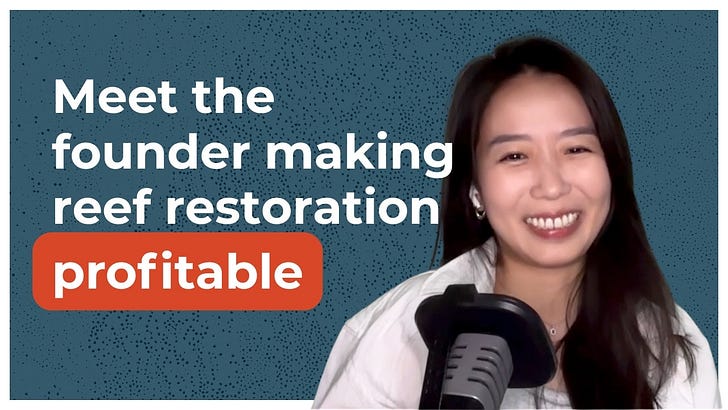


When COVID hit Kenya in 2020, Claire was on sabbatical from consulting, reconsidering her career after her second child. Within 24 hours of lockdown, she launched a GoFundMe called “Farm to Feed” to buy vegetables from farmers who’d lost market access and donate them to families who’d lost income.
Then she stumbled on a statistic that changed everything: 50% of fruits and vegetables in sub-Saharan Africa never reach the market. Half. Gone. While one in three Kenyans faces food insecurity.
“I thought there has to be more awareness about this problem,” Claire recalls. “I consider myself quite an educated person. I didn’t know that globally 10% of greenhouse gas emissions are due to food loss and waste.”
Today, Farm to Feed is a tech-enabled marketplace processing 130 SKUs through their Nairobi warehouse. Her path from charity to commercial venture offers crucial lessons for any social entrepreneur trying to scale impact.
Lesson 1: The Problem You Start Solving Might Not Be the Real Problem
Claire’s team distributed food for five months during COVID before realizing they were treating symptoms, not the disease. The real issue wasn’t temporary market disruption—it was systemic inefficiency that existed long before the pandemic.
The takeaway: Early-stage social enterprises often discover their true mission through action, not planning. Research from MIT shows that successful pivots typically happen within the first 18 months when founders have enough data but aren’t too committed to their original model.
“If I really want to solve this problem sustainably, we have to think of a sustainable solution,” Claire realized. By 2021, they’d pivoted to a for-profit model.
Lesson 2: Customer Obsession Isn’t Optional—It’s Oxygen
Claire’s transformation as a CEO centers on one realization: she wasn’t customer-obsessed enough. Even when she thought she was at 100%, she needed to be at 150%.
“If we miss one item for that customer, that’s a really big deal. For us, one item on this big volume is small, but for that customer, it’s a really big deal.”
Practical application: Claire’s team tracks every customer request in their CRM—even products they can’t yet supply. This data drives their innovation team’s decisions about which of their “rescue grade” produce to process into new products like pre-cut fries or tomato puree.
Lesson 3: Grants Are Leverage, Not Crutches
Farm to Feed’s funding journey breaks conventional wisdom. They deliberately pursued a blended finance model: grants to der-isk innovation, equity for growth, and now exploring debt for working capital.
Claire’s co-founder Zara taught her a critical lesson: “It’s a numbers game. Do 20 [grant applications], win one.”
But here’s the counterintuitive part—grants actually helped them raise equity. “If you have a startup that in their DNA, they’re really commercially oriented, but they’re able to get grants to stretch longer, have more runway, create more value... grants are really a great way.”
The strategic framework:
Use grants to de-risk untested aspects of your model
Match grants often require equity co-investment (forcing you to raise both)
Grant validation from respected organizations (like Mercy Corps AgriFin) signals credibility to equity investors
Lesson 4: Your Role Must Evolve or Your Company Won’t
At 20 people, Claire could collaborate peer-to-peer with everyone. At 50 people, that broke down.
“I realized the problem is not the company, it’s me at the moment. I need to change,” she says, crediting an INSEAD program for this insight. “In two years, my role will be different again.”
Claire’s evolution framework:
Identify what’s blocking each team member (capability, capacity, or team dynamics)
Participate in big decisions without micromanaging execution
Accept that hierarchy becomes necessary (even if it feels uncomfortable)
Trade being liked for being effective
Lesson 5: Innovation Requires Intentional Separation
With just 50 employees, Farm to Feed has an innovation team. Not because it’s fashionable, but because mixing future-focused work with daily operations kills both.
“I do try to separate very much anything that is like a dream from the rest of the team,” Claire explains. “Our mandate now is delivering on the here and now.”
The innovation team operates in phases:
Exploration (kept separate): Answer fundamental questions about new products/markets
Integration (selective involvement): Bring in ops, tech, and finance teams once concept is proven
Operationalization (full integration): New products enter standard processes
This mirrors Google’s 70-20-10 rule but adapted for a resource-constrained startup: 90% on core business, 10% on adjacent innovation.
The Uncomfortable Truth About Bias
Claire doesn’t mince words about fundraising as a female founder: “I do believe there’s a huge bias towards women entrepreneurs, right? And even though we all think there isn’t.”
But her insight goes deeper. It’s not about empowering women to fundraise better—it’s about addressing systemic bias at the source.
“I’m super feminist, but I have biases towards women... As an example, when I’m flying, when I hear a woman is our pilot, I’m always surprised, like is this going to go the right way.”
The data backs this up: Women receive only 2% of venture funding despite generating twice the revenue per dollar invested compared to male-founded companies.
Her call to action: Stop putting the burden on women to “lean in” harder. Start addressing the biases in the room where investment decisions are made.
The Mindset That Matters: Bring More Joy
When asked about staying strong during hard times, Claire offers something unexpected: “In order to do this long term, we need to have fun doing it.”
This isn’t toxic positivity. It’s strategic resilience.
“I started this because I was passionate about the problem. I started this because I thought it was going to be an amazing journey building this startup.”
The research agrees: A study of 6,000 startups found that founder passion—specifically passion for developing the venture, not just solving the problem—was the strongest predictor of success.
The Bottom Line
Farm to Feed’s journey from COVID relief to climate tech reveals a truth many social entrepreneurs miss: sustainable impact requires commercial discipline.
But it also requires something more—the ability to evolve continuously while maintaining joy in the work. As Claire puts it: “Let’s work super hard and be super smart, but let’s not take ourselves too seriously.”
The food system contributes 25% of global greenhouse emissions. If we can make it sustainable—reduce waste, improve distribution, support farmers—we’re not just feeding people. We’re potentially reversing climate change.
That’s a problem worth having fun solving.
Want to Learn from Purpose-Driven Founders? Subscribe to the Helping Billions Podcast.
Have a founder we should interview? Have them apply here, or nominate them here.
Resources Mentioned
Farm to Feed: https://www.farmtofeedkenya.com/
Bayer Foundation Women Entrepreneurs Award: https://bayerfoundation-wea.com/
Mercycorps Agrofin: https://mercycorpsagrifin.org/
Catalyst Fund: https://www.thecatalystfund.com/
Transcript
Mark Horoszowski (00:01:06):
Welcome to how to help a few billion people. My name is Mark Osky and I’m the host of this podcast. In this next episode, I am beyond excited to dive into a inspiring social enterprise called Farm to Feed. Farm to Feed was co-founded by Claire in the depths of COVID. Originally as a nonprofit. She saw that because of lockdowns in Kenya where she was born and living, there was a massive number of farmers who had produced food and then weren’t going to be able to distribute that. And then on the other side, she saw a lot of people who would not have access to not only not fresh food, but just food in general. So she started to GoFundMe. She raised money and used that money to help buy food from farmers that otherwise would go to waste and then distribute that to people who didn’t have the means to pay for and even access food.
(00:02:03):
Months into the process, she saw that this wasn’t just a one-time need that would be gone as soon as COVID was gone. She learned that one of the biggest contributors to climate change is actually food. Food that is grown and then goes to waste or is never distributed or never finds a home in products or in people’s bellies. Now, similarly, she lived in a place where there was a lot of food insecurity where on one side you have all this food going to waste, and on this other side you have people not able to access food and she thought there must be a way to make this work. So Farm Defeat is doing that. It’s now an organization of 50 employees started in Kenya. It’s now expanding across the continent and soon internationally, and they pay fantastic wages to farmers to improve livelihoods. They give farmers data on the types of crops that will actually give them even more potential to have higher earnings in the future.
(00:03:03):
Once there, they have a ERP software that essentially creates a lot of efficiency across the distribution chain of food to distributors, to then consumers of that. And then she also has a web platform and e-commerce platform that’s meant for B2B buyers like restaurants, hotels, and other manufacturers of packaged foods who will need ingredients. And they even have a factory where they do some sorting and semi processing of these food materials. So in this really far ranging podcast, we learn not only about her really innovative business model, but also how they continue to fund and support innovation even as they’re delivering on over 130 different products. In addition, we’re going to talk about what it’s like to manage people, how to manage people more efficiently. We’re going to talk about how Claire used blended finance, a combination of philanthropic grants as well as equity investment and soon to be debt investment to keep growing her enterprise.
(00:04:08):
And we’re also going to talk about how do you just listen to customers and then listen more and then listen even more. And then when you think you’re listening enough to realize you still probably need to listen more in all of these, you’re going to hear other tips for what it takes to just create impact as a growing enterprise. And for those impact investors in the audience, you’re also going to get some really great inputs on how you can be more friendly to support incredible social entrepreneurs like Claire. I am beyond excited. I think everybody said that, but I’m beyond excited for you to listen to this episode. Claire is inspiring, she’s fun to listen to, and you’ll see that she also brings joy into conversations and do her workplace. So without further ado, let’s dive into our podcast with Claire from Farm to Feed. Claire, welcome to the Helping Billions podcast. I am so excited to have this time together. Thank you so much for being here.
Claire Van Enk (00:05:05):
Oh, thank you, mark. I’m really excited. Thank you for doing this podcast. I think it’s so cool you’re doing this and thanks for featuring
Mark Horoszowski (00:05:12):
This. Yeah, well, thank you. Thank you. So I want to jump in. So I’ve been following the Farm to Feed journey for years now, and we even had the opportunity to meet last year where I feel like I got even more insights and what it was like to build this organization. But one thing that always stuck out to me about your story is that you came upon to quote your own words, right? You came upon this idea by accident. Can you tell me a little bit more about the inception story of how you decided to take this path into social entrepreneurship?
Claire Van Enk (00:05:50):
Yeah, it was really interesting. So I come from a more corporate world. I was a consultant before I was on a sabbatical, just had my second child actually and need to sort of rethink my career, but working really hard, not really thinking about what do I really want to do? And I think having children sometimes does change a person in terms of you want to do something more meaningful, something more impactful because you’re away from your children for a long day. So I was really on this sabbatical and this journey, what my next step would be. And while I was on my sabbatical, COVID hit and I was living. So background, I grew up in Kenya, I have Dutch origins. I moved back to Kenya almost after university, so I was living in Kenya. So COVID hit and COVID hit Kenya in a very different way.
(00:06:45):
It wasn’t like there were a lot of six people, but there was also a fear for what is going to happen to the economy. So from one day to the next, there was a lockdown. It was almost immediate. People couldn’t leave Nairobi. And you can imagine in a economy like this, it means people lose access to income and there’s no net that they can fall into. At the same time, because transportation was prohibited, farmers lost access to markets. So basically the day after I started a GoFundMe page called Farm to Feed, and I had some connections in the agricultural sector, and I called and I said, well, how are you moving transporting fruits and vegetables? And it was sort of like the real fear of a standstill and what would happen to individual livelihoods. So farm to feed the GoFundMe page, the idea was we’re going to fundraise for me to buy vegetables from these farmers that lost access to income and sell this and donate this, not sell, donate this to people who lost access to income. And that’s how Farm to Feed started. So that’s why the name is Farm to Feed. And then while we were doing this, we raised more funding than expected. So we continued this journey for 3, 4, 5 months. And that’s when we stumbled upon this huge problem that we thought we were solving because of COVID. But actually that’s when we learned 50% of fruits and vegetables in Sub-Saharan Africa does not reach the market for consumption. 50%, that’s half that is insane. And we think about food insecurity, that there’s a lack of food.
(00:08:31):
There’s a huge amount of food being grown in Kenya particular. And secondly, I didn’t know that globally 10% of greenhouse gas emissions are due to food loss and food waste. I didn’t know this and I consider myself quite an educated person. I thought there has to be more awareness about this problem. And then lastly, of course, the devastating paradox is that one out of three Kenyans faces food insecurity. So putting these three things together, I realized that coming from a consultancy background, more private sector orientated, I thought, I’m doing this because of COVID emergency relief, and we’re doing this because things need to happen now, but if I really want to solve this problem sustainably, we have to. And we had built a team by then, so I think more people were in agreement on the team. We have to think of a sustainable solution for this. And that’s when we pivoted to commercial. It took some time, some back and forth, some thinking. We had raised some money for the non-for-profit, and then in 2021 we pivoted to a for-profit organization really looking at this particular problem. So that’s the impact.
Mark Horoszowski (00:09:38):
Yeah, no, it’s an incredible story. And when we think about climate change, we think about natural, the usage of natural resources, right? Oil, gas, we think about airplanes, we think about cars with you, about manufacturing, all these things. And the amount of contributions from the agricultural sector and just the waste from the agricultural sector is really mind blowing. And then paired with that food insecurity element in the place that you’re living. So
Claire Van Enk (00:10:06):
25% of greenhouse gas emissions come from the food system, 25%.
Mark Horoszowski (00:10:11):
25%,
Claire Van Enk (00:10:11):
Which is wow. Yeah. So it’s also the problem. I don’t think it’s the problem of climate change. It’s there That lies the solution to reverse climate change.
Claire Van Enk (00:10:24):
If we
Claire Van Enk (00:10:25):
Can get food system sustain sustainable, reduce the waste, think about how we grow things, make sure we don’t work towards soil degradation and really transform the food system, really think because it’s complex, really think about all the different elements in terms of how can we make it more sustainable. I think the food system holds a lot of what we want to reverse in terms of climate change.
Mark Horoszowski (00:10:52):
Well, and I think as the episode goes on here, we will dive into these elements because I think looking at these different challenges, I think in the past, philanthropy or even social entrepreneurship has taken a single issue like climate or food access or farmer poverty. And I think one of the things that’s just really inspired me about your business model is how you’ve woven all those elements together, where tackling food insecurity also is going to have a positive impact on climate, which is also going to have a positive impact on farmer livelihoods, provided we can make connections across that system. That’s really what Farm to Feed does now. So I want to come back in a moment to how you pivoted from a philanthropic to a commercial model. But bring us to current day, then talk to us a little bit more about how exactly, how are you sustainable now? How do you generate revenue now and what does your current platform look like today?
Claire Van Enk (00:11:55):
Yeah, yeah. So I mean we did quite a few pivots. We evolved. I always say we also
Mark Horoszowski (00:12:02):
Evolved. We evolved.
Claire Van Enk (00:12:04):
We didn’t go from one to 10, it just went from one to one and a half and then anyway, but we are very different than we initially started. So now what it is, we are a tech enabled business focused on climate resilience of the food system. And what we do now in a nutshell is that we’ve built this tech. It’s three products. It’s the farmer app, it’s our internal ERP system, and it’s an e-commerce platform. And with this tech, we are able to aggregate the full harvest from farmers. So grade one, grade two, and grade three and internally processes and sell this to B2B customers. And with processing, I mean sorting and grading, but we’re also actually doing some processing of the products. And there’s a couple of things maybe that we’ve discovered is there are two problems that we’re trying to solve for the farmers and the customers.
(00:13:06):
On the farmer side, it’s a hugely fragmented market. So they’re dealing with multiple different brokers. It’s quite unreliable pricing, fluctuating, they don’t have access to capital. It’s not consistent, not reliable. So what we’re doing is consistent, reliable offtake for farmers and really good payment terms. So the payment terms are really important for a cash tight farmer. A small farmer are usually very cash tight. So the payment terms are really important. So we try to do that rigorously. And then on the customer side, they’re also dealing with this fragmented market. They’re also dealing with 10 different brokers, one for the tomatoes, one for their potatoes, one for your salad, one for your herbs, one for your fruits. So it’s very fragmented. Everything comes in different times. You have physical delivery notes that are not making sense. You have to reconcile, you have to pay, you can’t pay. Did you get this? Did you reject it? It’s very confusing also for the customer. So we’re solving those two to just have a very organized platform for these two groups. One where it’s just really consistent, transparent offtake and where farmers can give us grade one and grade two. But we’re also expanding. We have 130 SKUs. So farmers who have only regrowing tomatoes for example, can also go to higher margin products, for example, because it’s also really about increasing income from farmers.
Mark Horoszowski (00:14:27):
So that’s insight that you give to the farmers. They start working you with tomatoes, and then you might say, Hey, here’s data about what else the market is really interested in. Here are opportunities to potentially increase your earnings just based on the data that you and the relationships that you have with them already.
Claire Van Enk (00:14:44):
And we’re really eager for them to be able to do a crop rotation for them to grow different, a variety of crops. And as we grow, we can offer them to more and more customers. It’s also about how much demand can you unlock. The more demand we can unlock, the better for the farmer. And that’s why we’re also very much commercially driven. We strongly believe customer is key. And because if the customer is happy and we’re unlocking demand and we’re growing, the benefit is for the farmer.
Mark Horoszowski (00:15:16):
And talk to us a little bit more then about the customer side of this, and maybe you can mentioned tomatoes, so I dunno if that’s the most popular product that you process here or help farmers sell into the market. But maybe take us on a journey of one of these products, like farmer grows it, you get it, you do some processing, some sorting, some grading, and then it goes to a B2B. Who are these B two Bs? What do they do with it? And then what ultimately do consumers eat as a result of the marketplace that you’re helping facilitate here?
Claire Van Enk (00:15:49):
Yeah, yeah. I mean, in my view, if we simplify it, it’s very complex because we’re in this market where there’s such a fragmentation and unreliable information. But the process is very straightforward. So we know what orders are coming in. We place that with our farmers, and our farmers also can forecast with us. Of course, we collect that from the farmers or they bring it to their warehouse, but not all farmers have access to infrastructure to bring it to Nairobi. So we can either collect or they drop off in our warehouse. It’s then sorted and graded. So it’s sorted in grade one and sorted in grade rescue. And then we also have certain products that we do processing. So for example, if you peel a tomato, you don’t see there were slashes on the tomato because here in Kenya’s still very much using traditional harvesting it.
(00:16:45):
So slash potatoes is a sort of a natural byproduct. So we’re trying to be more innovative on these kinds of products to make the imperfect looking standardized. So that’s what happens in our warehouse. And then we have last mile deliveries delivered to our customer. We are 24 hours. Most of the products have to leave the warehouse by 5:00 AM because our customers, you can imagine there are hotels, restaurants, food schools, feeding programs. We have a variety of customers. They all need their products first thing in the morning. So everything actually is out the door by 6:00 AM by 12, the deliveries are done and we start the day over again.
Mark Horoszowski (00:17:30):
Wow. Wow. And so some of your buyers here might be getting, so to say, fresh ingredients like fresh tomatoes. Others might be getting those ingredients and then processing them into something like a chips or a sauce or something like that. So you’re serving both of these customer segments
Claire Van Enk (00:17:48):
And we’re really mean, the semi processing we call it. It’s what we’re launching now more and more. So we have about, I think six products now that we’ve launched that are semi-pro. So you think about peel, potato chips, fries, sauces, minced products, but that’s a new market here. It doesn’t really exist. There exists some of it, but we’re really pushing that as sort of a new product. So that’s different than more of the western countries where those things are much more common. Those things are still quite new here. Not everyone buys as products. So those is really new. Those are the products that we’re currently launching. And we see there’s a huge benefit there because also for us to increase our margins to become financially sustainable, which is important because we’re dealing with raw products, which, so those products are really interesting and we can get more into how you think about your business model, things like that. But yeah, that’s really important, but also allows us to offtake more from the farmers and more imperfect looking products.
Mark Horoszowski (00:18:55):
That’s interesting. Then that’s also where you have the real time insights, so to say, from all these B2B buyers, both processors and restaurants and hotels that you mentioned, they’re telling you essentially what you want, so you’re able to help say, yes, we have that, or No, we don’t. You’re aggregating more data. You’re able to pass on that information back via your farmer’s app.
Claire Van Enk (00:19:17):
And we have a innovative innovation team that is constantly looking at, okay, what products can we make? So we’re getting these products in, for example, there’s a lot of rescue products and potatoes. What can we make with potatoes? What products are there that we, that’s realistic, that our customers want and that we can help farmers with? So those products, but it seems easier, and once you get in the detail, you’re like, okay, there’s small stuff like fries have to be a certain length. And if you’re a commercial kitchen and you fry your fries and you have one small one, that’s the one that burns in the pot and ruins the taste of everything. So it’s quite a challenge, but I do believe we can get there, but it’s a challenge and it’s an interesting challenge. Yeah,
Mark Horoszowski (00:20:02):
Yeah, yeah. Devil in the detail on this stuff. Right. Wow.
(00:20:06):
Okay. I want to click into something that you just said. So we have an innovation team. And so tell me a little bit more about how big is the team now and how did an innovation team come to be? Because I think especially for an organization your size, having an innovation team isn’t probably as common. You think about that as a big corporate, they have RD teams or innovation teams, but it seems like this is so integral to your expansion and growth. So yeah, how many people are you right now, and then how did this innovation team come to be?
Claire Van Enk (00:20:41):
Yeah, so we’re about 50 people right now. And yeah, I call it the innovation team. It’s the product development team. But they are the ones, and they are on the ones thinking about these new products. So we already have this e-commerce platform. And what’s really interesting about the e-commerce platform is that now you have the sales channel. What else can you put on your e-commerce platform that customers really want? So you have your 130 SKUs, but now you can do other types of products, and they really think about that. What other products, what other products can we make? What other products are out there that would be interesting? How do we position that it has to fit in our mission? It has to be commercially interesting, and it has to be really interesting for our customers, but it also has to help our mission. So really focused on new types of products or new types of markets. For example, what is our next, is the next six months, what does the six months plus look like? Very small part of our business. Whereas I think 90% of the business is focused on the here and now and the core business.
Mark Horoszowski (00:21:52):
Gotcha. Okay. So yeah, not like a separate team and a separate little office making things up. They’re very integrated into the core business of figuring out where are we going? But really looking at, I would imagine combination of market analysis, customer interviews, some tests, some experiments, et cetera, to figure out what can go to market.
Claire Van Enk (00:22:11):
It’s launching something and making sure it becomes operational.
Mark Horoszowski (00:22:15):
I’d love to get in your mind even into the workings of your organization a little bit, because one thing that I’ve seen so often that entrepreneurs struggle with is, I need to deliver this thing yesterday. I’m just in full execution mode, but I also need to keep growing, and so I need to invest in that product team and that innovation team to keep growing. How do you, as leader of this organization, how does the product slash innovation team, how do they work with you? How do they present ideas to you? How do they build the case that we should go to market with a new SKU or not? Can you bring me a little bit more into just what that process looks like and how do you all collaborate? How do you end up making decisions? How do they present that information to you? The more detail you can get into here, I think would be really fascinating.
Claire Van Enk (00:23:10):
Yeah, yeah. So one thing, I mean, back to what you said. I mean, I do try to, as much as the whole team was working together, I do try to separate very much anything that is a dream from the rest of the team. As much as I realize the rest of the team also finds it intriguing. I mean, strategy, innovation sounds interesting, but our mandate now is delivering on the here and now, our business model as it is. So the team really has it. So it’s all about, it’s really important that the team focuses on delivering and executing quickly. So that’s one thing. So the innovation team was initially when I started it, or when we started as a company, it was really separate. I mean, I didn’t really mix it because we were having initial conversations. I didn’t want it to be a distraction for other people.
(00:24:02):
They just needed to really think about what was that product? What does the demand look like? What does this team look like? We wanted to go into international markets. So it was really focused on not the Kenyan market. So there wasn’t really that overlap needed. But once it becomes more, once the initial questions are answered, it becomes more interesting, okay, how do we now deliver on this? What needs to change on the tech? What needs to change on the operations side? What processes need to change? What needs to change commercially? What needs to change financially? It was really a process of trying to answer the questions. And once you’ve answered, okay, this is the product, this is the target market, these are the partners who are going to help us with the product, then it becomes more concrete. So then you can start involving your team members on the specific subjects.
(00:24:55):
You also, you need buy-in from the team. I really believe that it’s that balance, and you can never really get it right, to be honest. Some people want to be more involved, some people don’t want to be involved. So it’s striking that balance. So just making sure you have a workshop at the end of three months, this is what we achieve, this is what we’re going to do. And then integrating it more and more for the people who don’t want to be distracted. It’s a distracted, and for people who are easily distracted, it can be a distraction. I really have to box it in a way. But now the team, what they do now, it’s very different than six months ago, is we decide as a team together with the sales team, what are those products that are interesting? Then the product team, the new product team or the innovation team, they develop the products and we do workshops after workshops, and the devil is in the detail, and then we launch the product, but then it needs to be operationalized. So then we’re heavy operational company. So then it needs to go in the standard processes and understand, okay, when an order comes in, when is it processed? What is the processing method? What are the commercials, all those things.
Mark Horoszowski (00:26:03):
So let’s say it’s french fries. So sales team starts hearing like, oh, customers are saying, Hey, do you have pre-cut potatoes within these sides? Right? Innovation team kind of learns of this. They probably do some research. They start figuring out some of these devil in the detail things like french fries must be of a certain size, otherwise they’ll burn in the oil and ruin the whole batch as you were sharing earlier. And so then they’ll do analysis. They’ll say, yes, we could actually do this at scale. And then at some point you’re looking really to the core delivery team, like your day-to-day operations team and saying, okay, let’s get more input here. Where can things go wrong? Where can they go? How can we actually do this and standardize this and get to any level of scale? So if I’m tracking all that, one thing I’m curious about is when do you as founder and CEO look at this and then look at the finances of it and do some analysis? Is it more intuition? I think the market’s growing, let’s just go for it. Finances be damned? Or you’ve got a consulting background. Are you in a spreadsheet doing modeling? What is that like for you?
Claire Van Enk (00:27:13):
Yeah, so I’m heavily involved from the beginning. So what products are we going to make next? Because everything that’s working, I’m expecting to work. So that’s like managing check-ins, making sure it works and escalating and solving and unblocking. Whereas this is like, okay, are we going to go for tomato puree or are we going to go for banana puree? Are we, where is the market? What is it? And to be honest, I think it’s a lot of gut. There’s also, we go to restaurants, we know this market, what they use. It’s more the question, are they ready for it? Are they ready to stop making it themselves and buy it readymade? So I’m quite involved in that decision making, but I have a really good team. Now also, this is quite recent, but we closed the fundraising February, so I now have incredibly talented people on the team.
(00:28:12):
So who prepared the workshop front and end? So I attend. So before we decide on which products, we do that as a team. The team then prepares the workshop. We attend the workshop. It’s all really well organized, but in the workshop, we actually touch on everything. So from operational to the tasting to the finances. So we touch on everything, and I now have really good people who dig in the details. So I don’t have to do that anymore necessarily. I’m basically involved in every step. So once we decide on the price, yes, we decide on the price, and sometimes I do say, I trust you on the price, or I trust you on the operator, or I trust it’s also which products, how unclear is it? How much ambiguity is there? Yeah, sometimes it’s more straightforward and sometimes it’s more fake, but I’m quite involved. Yeah, yeah.
Mark Horoszowski (00:29:09):
Okay. So there’s a little bit of, so to say, let’s call it founder intuition or just human intuition based on the different, when customers are asking for some things before you’re even investing, and then the next phase, so to say, of that, which is it sounds like this more research and workshop process, you’re working with a team, you’re saying, okay, I hear customers wanting that, but I’m pretty skeptical, but this one makes a lot of sense. Let’s do that one first. That goes through a bigger process. That’s when you’ll pull things in more years of research, more team input, also look at finances, some projections on the products. You kind of go through that process, and if it meets certain criteria, then you’re passing it on and then operationalizing it. Am I tracking? Does that sound right?
Claire Van Enk (00:29:51):
Yeah, yeah. I mean definitely what we also do, the sales team does a really good job at tracking the products that customers find interesting. So we do have a template like crm, product CRM basically, where they really say, okay, these customers have asked for these products. And there is a lot of intuition from the team, not just my, but from the team. I really see as a team, a effort. There’s a lot of intuition, but it is definitely informed by the team having these conversations,
Mark Horoszowski (00:30:25):
Having the power of that kind of data backbone too. So you are in the sales theme is probably rigorous about putting in what requests are coming in, even if you can’t serve them yet, so that you’re cataloging this information over time. Yeah, very smart. Very smart. Okay. Earlier I mentioned that we were going to come back to questions. So I want to go way back earlier in the journey. I know we’re jumping around here, but you started as a nonprofit, right? You got philanthropic donations, you used that to buy produce and then deliver it. At some point you switch to a commercial model. Let’s start with what led you to, because I’ve seen so many people just start on the philanthropic path and then just stay there. What for you made it clear that yeah, we need to switch this model and create a commercial model here, and most importantly, how then did you get your first customer?
Claire Van Enk (00:31:24):
Yeah, well, I think the team that I had was all more from private sector. That orientation, it felt more natural with the team and myself. I’ve been consulting for businesses, so that’s one really I think with every choice we make now, I also look, is our team, does that fit with our team, DNA or the affinity with the team because then it will work. So that’s a huge big driver, and I strongly believe that solving something at scale or ingrained in society is through a sustainable, financially sustainable. I also think fundraising in general is hard, but fundraising for a non-for-profit is really hard and it’s quite scary because you don’t know, you get funding once, but you don’t know if you’re going to get the funding next year. So working to more financial sustainable financially, sustainability is, for me feels like a much more safer
Claire Van Enk (00:32:31):
Bit.
Claire Van Enk (00:32:31):
I also think this problem of food loss in particular has been people have attempted to solve it through charities, and I think there’s so much you can do, but I think it just now just needs something very sustainable, entrenched in people actually buying it. It’s a huge commercial opportunity. It’s a huge commercial opportunity that people are utilizing. They’re seeing it as waste, they’re discarding it, they’re not seeing it as valuable. I think we really need to change that. I think there’s huge value in imperfect produce. It’s cheaper, but you can make anything from it. So there’s a huge margin potential there. It can really transform the food system. It can decrease greenhouse gas emissions. So there was a huge drive for that sustainability piece that it can outlast us as a team.
Mark Horoszowski (00:33:25):
So you switched to commercial model, you’re growing, you’re proving market traction, and then you set out to go raise money. And if I understand it, you just closed around and it’s a blended, you have some grant capital in there, but then you also have some, can I ask, are they debt investors? Are they equity investors, or is it a blend?
Claire Van Enk (00:33:48):
Equity
Mark Horoszowski (00:33:49):
Equity investors? Yep. How did you decide that equity was the right way for you to grow here at this particular round?
Claire Van Enk (00:33:58):
So we raised a pre-seed round, which was equity and grants, and we were lucky. We were able to get quite a few really, really amazing grants, sort of de-risk the business as well. We realized, okay, we’re doing something new, we’re doing something that people really see as impact only, whereas I see it as, I see it as a commercial opportunity, so we need to de-risk. And grants are really good to de-risk certain aspects of your business. You can develop projects around grants, but I really think this is a commercial opportunity. So for me, equity was not a question, and I really see an opportunity for this e-commerce platform that customers want. So for me, definitely it equity. I know also in the ag space in Kenya, there’s a huge opportunity, but it’s complex. It will take time building a supply chain, also investors that were commercial, but also really understand the fabric of the African Ag space. So equity was definitely there, and I think we’re now looking at debt as well, because now we’re increasing revenue, meaning that we can look, we’re not profitable yet, but there’s a pathway to profitability. So I feel more comfortable raising debt.
Mark Horoszowski (00:35:27):
I think having that blended mix of you’re looking at grants to really support that the business model creates impact. You see that the impact is there, and then the commercialization model, you’re using equity then take over that higher risk phase of growth, and then you’re shifting to debt when you then are validating that you have consistent ongoing revenues and can support the cost of interest there. I’d love to go into all of these topics just a little bit. How did you find some of your first grants in order to de-risk your business model and impact model? How did you find grants like grant givers? How did you get in the door? How did you convince them?
Claire Van Enk (00:36:10):
Yeah, I mean, I can thank this to my co-founder. Her name is Zara. She comes from this world, so she taught me everything about grants. So she was in the beginning when she wasn’t on board yet, it was really a spray and pray approach. So I was just applying to everything and we didn’t win anything. It’s winning. So you need to do, and I was also deeply discouraged. Every time we lost, I felt my heart was sinking. So she came on board and said, well, it’s also a bit of a numbers game. We have to be really good and targeted, but you also need enough applications to win one. So whatever your chances are, and as you get better at it, the numbers get better as well. That’s what I’ve realized. But in the beginning, do 20 win one. And it’s also about, there’s some applications that you just get, but there’s some grant providers that are looking for really good solutions.
(00:37:11):
So is that combination? So I think the first grant that we got is prize money, the Bayer Foundation, the Women Empowerment Award. So that is doing the application and just hoping you can win the prize. But the second one we got was Mercy Corps, and that was also very, very catalytic for us. So they funded our first version of our tech platform and they de-risked us a lot. Once you get a name like that, it’s the second grant provider that feels, aha, you got Mercy Corps afin, alright, I mean, that must be tough. So now I trust that you have something good, so I will fund you as well. So it’s really, I do think getting someone on your team or working with someone that understands this world really well, if you don’t, even though you think I thought I understood it, but speaking the language, knowing how the financial streams go, all those things. And that’s I think thanks to Zara, she really brought that to me, especially from that we got prize money and then we got our first grant, and once you get your first grant from that size, it makes it easier to convince other grant providers that you’re for real
Mark Horoszowski (00:38:24):
To go. Okay. Yeah, it’s a great piece of insight. And then one challenge that I’ve seen when folks move from Grant to then equity or honestly even debt, there’s almost this anchoring of like, wait, are you a nonprofit? How did you The judgment. The judgment, yeah. How did you kind of work through that? How did you find investors that would be open to it? How did you convince them that you really had a commercial model when your prior funding was maybe more what felt like philanthropic?
Claire Van Enk (00:38:58):
Yeah, I mean, I have to be careful of course what I say, but there’s a lot of bias of course, that you have to, which is natural, which is normal, but you have to be really aware of it and understand with every bias, okay, how do I respond to it? I do think a lot of people told me, don’t raise too much grants because then VCs don’t find you interesting anymore. I think that’s maybe true for one or two, but it is non-dilutive, capital, capital. So for an investor, it’s also really good if you have a startup that in their DNA, they’re really commercially orientated, but they’re trying to also do something and able to get grants. So be able to stretch longer, have more runway, great, more value. I think grants are really a great way, and grants really make a difference, can really de-risk certain things that investors aren’t not ready to invest in for you to make certain choices before you put it in your business model. Things that they’re really good. And I think grant providers are really, really important, especially in this market. So I’m really thankful for all our funders and they bring great ta and they’ve been in this space for a very long time.
(00:40:21):
And there are also commercial, A lot of the grant providers, they also say, we are going to give you this grant, but you have to match, fund it with equity, for example. So if you get a hundred K from a grant provider, they say you need a hundred K equity. So these grant providers are just giving free money how people say they are also cognizant of these solutions have to be sustainable. They’re not. They’re smart people and they’ve thought about what they do.
Mark Horoszowski (00:40:48):
It’s really interesting to hear that some of the grants are saying almost use me as leverage to then go get more investors. I was even talking to entrepreneur once who found a lead angel investor and I think the investor, this was a number of years ago, but said, y’all invest like $50,000 and I’ll write you the check today. It was ready to go and the entrepreneur said, I’ll make you a deal. I want you to invest $75,000. But only after I bring two other investors to the table at equal amounts and was then able to go to other investors and say, I already have one investor at $75,000 that will commit if you commit, and was able to actually use that as leverage. It was actually quite an interesting approach. And what about finding investors for you? Did you network? Did you get those intros from the grant givers? Were you using AngelList? How did you go out and actually find your equity investors
Claire Van Enk (00:41:48):
Was tough because that’s when you’re starting. You have a little bit of traction a tiny bit. You have this, we’re going to take the waste from farmers and we’re going to make this commercial story. You have no idea. Also, another thing, you have no idea about the jargon. You don’t know you’re going in, you’re not entirely sure what they’re looking for. I think looking back at three years ago when we did that, and now it’s a world of a difference for first time founders. So our first investor, I’m eternally grateful for Catalyst Fund, and I will say that on every interview because they believed in us. That is the first stamp of validation for a founder is it moves you, it does change. It changes everything. It changes everything. So they were the first, and I don’t even know how I convinced them to do this, because we’re getting, everyone was sort of not even taking my calls or I was doing pitches, and then they would ghost me afterwards and we were really trying. And then I got an advisor on board also eternally grateful. His name is Greg, if he’s listening to this. Also a staff validation that you had someone who was going to spend time with you, who believed in the model, believed in you. And what he also said was, let me demystify what’s happening here. And giving you the jargon and the language, and it’s a certain speak that you have to learn what are the numbers that they’re really looking for, how to make sure it’s always snappy and it’s always quick.
(00:43:31):
So I think those two were really important. And it was in the funding winter, so it was in general. We started fundraising right after everything collapsed. And here in Kenya it was really hard. So I mean, that’s also part of it, but also taught me a lot of resilience. And that’s also the reason we went after more grants because we heard how hard it was and it was hard. And grants were there. The seed round, still make sure you always have, well, for me, I made sure I had someone next to me who was really good at strategic finance, who had seen multiple startups, who understand investors who are quick and turnaround. So it’s those people next to you that really help you. And the second fundraise were much more organized is preparing the data room before preparing the model, before having the list of investors, having a really good intro email, sending that out, having your top 50 investors that you want to reach out, having a long list, having a short list, sending it out, having a closing date, having quick turnaround with questions. So learned a lot from the first round. How not to do it. It is a third language. I do think that you have to learn as you fundraise. There’s something in on the way you pitch, the way you deliver, the way you talk about your number, the way you talk about the market size, the way you talk about your team.
(00:45:05):
You have to be punchy and you have to know what are those things that you need to say to tell your story.
Mark Horoszowski (00:45:13):
Yeah. Well, I know if we had more time, or maybe this will be in a follow-up episode, maybe we can do this again at some point in time. But I think there’s one thing that maybe you haven’t said as explicitly, but I’ve just kind of been hearing you mention a couple times and I just want to shine a light on it because I probably think it speaks to a superpower and an innate talent that you have. I hope I’m right on this one. But it also seems like in every one of these challenges that you’ve worked through, it’s always telling that you’re finding other people who also have talent and expertise in that area. And it seems like you’re creating a really collaborative relationship with them in order to then say, okay, this is what the business needs, this is the expertise that you have and let’s combine these. And I think that was, you mentioned Zara from a co-founder and a grant perspective, the way it sounds like you’re involved with operations and your innovation team and your sales team. So I think there’s also something, there’s a takeaway there that I think if we have more time, I’d love to get into more of how do you kind of build and build that strong collaboration as a founder without feeling like you’re up in everybody’s things, right? But you’re also really a collaborative thought partner and problem solver.
Claire Van Enk (00:46:34):
One thing I really like is working with people. I really like when, and I really like it when people are better than me at what they’re doing. Because there’s one thing I know, I don’t know how to, now I know, but fundraising, I didn’t know how to do it or the contracting of fundraising. What does this mean in this term and this clause and this or how to build a tech platform or all those things. So I’m heavily reliant on making sure that whoever’s doing it is completely comfortable and is unblocked of whatever is blocking them. So I think that’s my role mainly. It’s like how do I unblock whatever? Is it team dynamics? Is it capacity? Is its capability? So identifying that and making sure that that works. I don’t always intervene in, okay, I am always there in the big meetings when I work in a way that they call for the meeting and say, these are the big decisions we have to make.
(00:47:33):
I’m in those meetings. I support the decisions or not so that we’re all in one place aligned. But I think I don’t do a lot of micromanaging necessarily. I think I’m more peer to peer collaboration than sitting on top and understanding what everyone’s doing. In the end. Everyone has their KPIs and everyone knows what they’re supposed to do, but having those good relationship with the team is really important. But that being said, I know sometimes I also disagree with something, for example. So as much as you want to be completely collaborative, I also had to learn as a CEO, and that was tough for me. I’m a people pleaser, and that’s also been tough for me. That’s been my growth in the past year is I cannot please everyone. And sometimes that means I’m making tough decisions or having tough conversations. That’s been my growth area in the past year because going from 20 people to 50 people is a different organization and requires a different collaboration and requires also a little bit more hierarchy and less buddy buddy. It’s more we’re organized. This is what you’re doing, this is what you’re doing, this is what you’re doing. You’re responsible for this. There’s ownership on your end and not getting muddled in the day to day.
Mark Horoszowski (00:48:57):
Is there a mental model? You said you had prior experience in consulting. Is there a framework? Is there a book that you’ve read? Is there something that you feel has really helped you kind of make that shift from being in the details of everything to shifting to people having more autonomy, more clear KPIs, you being able to elevate and have more time for strategy? I’m curious, what has helped you make that shift?
Claire Van Enk (00:49:21):
What really came at the right time was, so I got the cart award and there was a four day NCI program, and it was really about, we were all 33 companies that were selected all exactly in the same phase. So it was really interesting when the INCI course professor showed the curve of a growing company and the different challenges as a founder, CEO, and that resonated a lot with me, and I realized I really need to change something here for the sake of this company. So that was one critical point that made me realize the problem is not the company, it’s me at the moment. I need to change.
(00:50:05):
So having that self-reflection of I really need to change and I need to own this role in a different way, and in two years my role will be different again. So I need to change with every phase of the company, and that requires flexibility and understanding the needs of the company. And then there are many books on entrepreneurship and I love them. And sometimes I also get insights from interviews from people like, oh, that’s so true, how relentless you have to be on the customer. That is, you have to be so committed to the customer. I always thought I was committed to the customer and I realized I need to be 120% in. And then when I was 120% in, I was like, I need to be 150% in, and that’s not me talking to the customers, but my head of growth again on my sales team, it’s really about, yeah, if we miss one item for that customer, that’s a really big deal.
(00:51:08):
And for us, one item on this big volume is small, but for that customer, it’s a really big deal. So it has to be, there cannot be any error in terms of our deliveries or our growth that cannot be slow, even if it’s three seconds, all those little things. So just has to be perfect. And I’m sure that now I am still not, I think I’m super committed. I’m quite sure I’m still not as committed as I can be. So that’s another phase growth. You just have to be super committed because the customer is key to all the impact we want to unlock. And you have people on the team also reminding you about that. The customer is key to unlocking everything we want. Everything we want for this company is actually in the behold of this customer. So we can just get that absolutely perfect investment will roll in. If we can get that good farmers will have the impact, we can grow this company, we’ll create employment, we’ll create impact on the food system, all those things.
Mark Horoszowski (00:52:20):
Yeah. Yeah, there’s a quote there, right? Product market fit solves all problems, but to get to product market fit, you need that customer obsession. Yeah, that’s great. Claire, I know that you have kids at home. I know that you’re leading an enterprise, it’s growing, so I could go with you. I’m confident with the right amount of coffee and bathroom breaks probably all day. In terms of conversation here, I feel like we’ve already gotten so much. I want to jump into what we call our lightning impact round. So it’s just a few quick answers to a few questions to just trigger some ideas hopefully for our listeners. So what is one mistake that you’ve made that you really hope future entrepreneurs won’t make?
Claire Van Enk (00:53:11):
Not onboarding a customer quick enough,
Mark Horoszowski (00:53:15):
Love it.
Claire Van Enk (00:53:16):
Focusing.
Mark Horoszowski (00:53:16):
Okay.
Claire Van Enk (00:53:17):
Yeah, focusing on the product too much before getting a customer.
Mark Horoszowski (00:53:21):
Okay, love it. Tell me about your biggest challenges in fundraising and what is one thing you want all impact investors to know or embody more
Claire Van Enk (00:53:33):
Is such a good question. So much frustration.
Mark Horoszowski (00:53:37):
It’s a hard process. Yeah,
Claire Van Enk (00:53:40):
Hold on. It’s like, no, no, I love all my investors now. No, I think what I want investors to know is you are on founder’s time, and I know investors think that they know it, but the same as I don’t know enough about the customer is that they still don’t know enough about that. And one thing also starting a company, and that’s maybe for investors, but across, and there are many investors who started companies, but I do see starting a company as a little bit is having children. You just don’t know until you do it. It is so much more and so much more complicated. One decision has impact on everything. So giving advice on one thing without knowing what’s going on there or, yeah. So that’s one thing. And I think another one, and you can choose which one you’re going to do is I get a lot of this, don’t listen to all these investors advice. You’re going to get so much advice. And once they say this, they give you advice.
(00:54:59):
And I think what I would really like investors is more of this. What is it? Like walk with me for three days and understand what’s coming, coming at me on a day to day, what problems I’m solving, how my time is spent, how I get pulled into things, what the team is experiencing. That’s one thing. And another one you can choose, one is specifically on women. I find that really important is be aware of your bias. I do believe there’s a huge bias towards women entrepreneurs, and even though we all think there isn’t, I think for women and men alike, there’s a bias. I am super feminist, but I have biases towards women and I am fighting for women. But I know in me, I’ve been brought up with that a man can be a pilot and a woman, even though I was never explicitly said in that way, but it was in our youth. That was the thinking. And that’s hard for me sometimes to get it. When I hear a woman pilot, I am always surprised, is this going to go the right way? So even if I have this, everyone just has to be so aware that they have these biases.
(00:56:25):
When I talk to an investor who has this bias, I feel it. I hear it in the questions. My questions aren’t good enough, they’re a bit challenging. There’s a different speak. So I don’t think it’s about empowering women necessarily on how to fundraise. It’s really can we for once have the conversation about how we’re going to address these biases? Because it starts at origination phase. If we don’t get that first memo right, then women stand a chance to ever raise that 2%.
Mark Horoszowski (00:57:01):
Yeah, no, thank you. Yeah, and it’s wild, right? Because the data is very clear. There’s rampant bias in the process. And you made me think of a non Gerhard book in his book, winner’s Take All, and he actually talks about Sheryl Sandberg and the book Lean In. He’s like, we spent all this time saying, oh, women need to lean in more and do this. He’s like, how about men just shut up for a moment and create space and understand that the answer to everything is not, oh, let’s put more weight on others trying to educate them or do this for them. It’s like, no, address your own biases. And yeah, I think there’s a big challenge there, and a lot are resistant saying like, oh, no, I am not. And I think it’s really cool of you to say, no, even I have bias, right?
Claire Van Enk (00:57:56):
Yeah, exactly. I have bias and we have bias. And one thing that I’m missing is we can never address it. I’ve had investors where I knew clearly knew as bias, and I was thinking, I should actually write them an email saying, think your feedback is maybe not the type of feedback you would give like a male entrepreneur, for example. And then I’m concerned because then am I going to be ousted? Or what are they going to, whereas I want to open up this conversation more in a what do about this bias lives in all of us, and especially here in this continent. So you have to imagine, I still have the privilege of being a white woman, and we don’t discuss how is it to be a black woman and fundraise?
Claire Van Enk (00:58:46):
What
Claire Van Enk (00:58:46):
Chances do you have up against, if I can stereotype a 60-year-old white male in wherever they’re from? How do you overcome those biases? And I do think there has to be some more self-reflection on the investor side.
Mark Horoszowski (00:59:07):
We’ll drop in the show notes, but there’s some good organizations both doing some work around that and also presenting data. So some of the pieces that we’re talking about for listeners, we’ll drop that in the show notes. I think it’s a super important topic
Claire Van Enk (00:59:19):
Just to say there are a lot of good investors that don’t have this and that really actively work on that and that are very aware of it. So that’s not to say at all, but we just have to have it as it needs to be more of a conversation. That’s what I’m saying.
Mark Horoszowski (00:59:33):
Yeah. Yep. Fully agree and more onus, and I think responsibility for those with capital, especially if we’re trying to solve problems here and support entrepreneurship, there’s work to be done there. Absolutely. Okay. Shifting gears a little bit on the lightning round question, and I love that we went deeper there, but bringing us into your head a little bit more, what is a quote ritual or activity that you turn to yourself for strength? When things get super hard?
Claire Van Enk (01:00:06):
The quote is, in order to do this, we need to have fun doing it. It sounds so stupid, but what I really get, it sounds so simple. Sorry, I’m so cliche, but I love it. I said that to my team as well. If there’s on the brink of burnout or they can’t see through the woods anymore and they’re coming to me and I think, I can’t do this anymore. The pressure’s too much. I really try to take the pressure down. I mean, just guys, we’re really trying to do something that didn’t exist before. We’re trying to do something that’s really good, right?
(01:00:47):
I’m having fun doing this, but I need you to have fun, and when I’m not having fun, then I also say, well, I would never say let’s or any of that. Let’s give up. No. It’s like, okay, am I really stressed right now? I started this because I was passionate about the problem. I started this because I thought it is going to be an amazing journey building this startup. I started this because I wanted to work with these people that I was really admiring in terms of how good or passionate they were or committed they were. Those are the reasons why I started this, so I really try to say to myself, I need to enjoy and have fun.
Mark Horoszowski (01:01:32):
Three more questions here. Who is an entrepreneur you admire?
Claire Van Enk (01:01:37):
Okay. One founder I admire is she was in my che. She’s going to be so chuffed that I’m going to say this. She was in the CHE group and I mean all the women there. I admire really, I would love to see, I hope we can do yearly reunions. I think there was such a bond that we created, but the one that I admire, all of them I admire. The one that I would feature here is Laura Harnett. She’s the founder of ceep. I think her product is really cool, so she’s making sustainable products, things like sponges and stuff like that. I think her mindset on this is sort of similar to me is also work really hard, but also laughing while you’re doing it and the ridiculous stuff that while building this startup or looking back and can you believe that we built it with this or that, or we had no talent or we have this, I think that mindset, I really enjoy that mindset of let’s work super hard and be super smart, but let’s all, let’s not take ourselves too seriously.
Mark Horoszowski (01:02:56):
Sure. No, it resonates. Well, this next question might even be the same answer, but who else do you think we should interview for this show?
Claire Van Enk (01:03:05):
Ah, yeah, you should interview her. Yeah, for sure. Perfect. Yeah, I can get you a list of all these great women from the cartoon. They’re all super aligned with what you do. So all impact focused, all great personalities have stuff to say, so I can give you, I’ve seen some.
Mark Horoszowski (01:03:30):
Yeah, well, I’ll have to take you up on that. I’ve seen some wonderful entrepreneurs come through that program. And you inclusive, so last question. Where can we follow you? How can we support you?
Claire Van Enk (01:03:43):
Yeah, LinkedIn, Instagram, those are places that we’re active and I mean any connections partners that you think will be useful from investors, but also potential international clients that are interested in our value added products that are interested to make food products with us. We’re looking at powders and purees, so anything that you think, okay, this might be an interesting market for you or someone that would be able to give us some more information. Market insights. I really strongly believe in partnerships and collaborating to make this work.
Mark Horoszowski (01:04:26):
Perfect. Well, we’ll put those links and more information down in the show notes. Claire, we could continue for so long, but I just want to say, I think you’re an absolute inspiration. I think the way that when the world was shutting down during COVID, the fact that you went to How can I contribute to the community that I am from and that I live in, ability to see the writing on the wall, that this could be more sustainable as a commercial enterprise. The path that you’ve taken and the fact that you’ve done all of that with kids in the house. I have a 2-year-old at the time of recording this in the house. I know how much extra work that is and I know that the mothers bear even more weight and responsibility in that process. So I think it’s absolutely incredible what you’ve done here. We so look forward to following along, but thank you so much for taking the time out of your very, very full life and demanding work and family to share your insights here. I know it’s going to be huge value to our listeners.
Claire Van Enk (01:05:27):
No, thank you so much. Oh my God, thank you, mark, for highlighting all these founders and entrepreneurs and all the people around the world trying to build something that matters. So thank you so much for doing this and highlighting us, and I also hope it’s not too much editing this interview for you. Not at all.
Mark Horoszowski (01:05:47):
Not at all.
Claire Van Enk (01:05:47):
This
Mark Horoszowski (01:05:48):
Was excellent.
Claire Van Enk (01:05:49):
Thank you so much. Really appreciate it and see you next time. Hopefully somewhere on an event or the next podcast.
Mark Horoszowski (01:06:00):
Yeah, here’s hoping! Thank you, Claire.