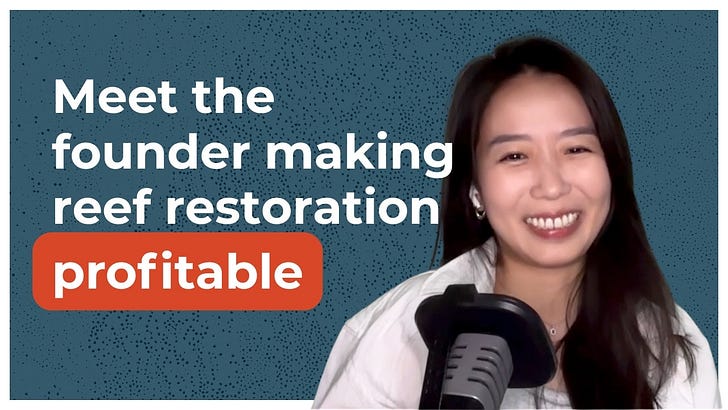


Mercedes Bidart left New York on a humanitarian flight during COVID, moved to a country she’d never lived in, and started lending $10 to people no bank would touch. Here’s what she’s learned building Quipu into a breakeven fintech that wants to become the credit bureau for Latin America’s informal economy.
In Latin America, nine out of ten businesses are micro-enterprises — fewer than ten employees, often a single person with a food truck, a sewing machine, or a box of handcrafted bags. Together, they face a funding gap of more than $1.4 trillion. They are the engine of their economies. And the financial system pretends they don’t exist.
Banks won’t lend to them because they have no credit history. Traditional microfinance institutions struggle to serve them at scale. And the alternative? Predatory lenders charging 20% interest — per week — who show up at your door if you don’t pay.
Mercedes Bidart, an Argentine political scientist who grew up in a family of small business wonders set out to change this. She built Quipu, a fintech that uses alternative data to assess creditworthiness for people the traditional system has left behind. Starting with $10 loans and a dataset they built from scratch, Quipu reached breakeven this year — and now has its sights on something much bigger.
This interview was full of lessons I think every social entrepreneur, impact investor, and business builder needs to hear.
1. The Best Ideas Don’t Arrive — They Emerge
Quipu didn’t start as a credit scoring company. It started as a community marketplace with its own digital currency… and it didn’t work.
The original concept, called Quipu Market, was a platform where informal businesses in underserved neighborhoods could upload products and transact with each other using a local community currency — money that stayed in the neighborhood. Mercedes and her co-founders spent a year going door-to-door, uploading businesses onto the app. “The app was shitty, like it was terrible,” she laughs. “So it took two hours uploading each business and helping them take the pictures of their products.”
It didn’t work. But what they saw while doing that grueling fieldwork changed everything. What micro-entrepreneurs needed most — especially post-COVID — wasn’t a marketplace. It was working capital. They had the equipment. They had customers placing orders. They didn’t have money to buy supplies.
“We noticed that actually what they needed after COVID was working capital to buy supplies again and start selling again because they had their fridge, their oven, the food truck, but they didn’t have the final supplies to start cooking the hamburgers again.”
Mercedes references Otto Scharmer’s Theory U from MIT — the idea of “leading from the emerging future.” Rather than clinging to the original plan, the Quipu team followed what the business itself was telling them. “No, let’s be the credit bureau. Like this is even bigger. It’s not just lending. And when we understood that, then it was like, okay, this is what it’s emerging.”
The takeaway: Your first idea is a vehicle, not a destination. The founders who build lasting companies are the ones who stay close enough to the problem to see what’s actually needed — and brave enough to follow it when it points somewhere unexpected. As Mercedes puts it: “I don’t think that you just know. Rather, you are passionate about the topic, then the solution comes by implementing different ideas.”
2. When There’s No Data, Build the Dataset Yourself
Here’s the chicken-and-egg problem at the heart of financial inclusion: you can’t assess credit risk without data, and the people who most need credit have no data because they’ve never had credit. Most institutions look at this and see a wall. Mercedes saw a research project.
“To build a data set, as this is an informal economy, there’s no information, there’s no data available. We needed to build the data set ourselves.”
Quipu started giving out loans — beginning at just $10 — specifically so they could generate the data needed to train their risk models. They captured unconventional data points: photos of businesses (originally uploaded for the marketplace), videos showing inventory and stock, answers to onboarding questions. Then they watched what happened.
“You need to capture as much data as you can, allocate the capital, and then see which type of data was actually predicting risk and what is not working.”
They even designed the experiment like researchers: 50% women, 50% men. And they needed some people to default. “We needed people not paying us because that’s the way you train the model.”
Today, Quipu has allocated more than 40,000 loans and uses this proprietary dataset to sell credit scores to banks, microfinance institutions, and digital wallets — proving that the people rejected by the traditional system are bankable when you measure the right things.
The takeaway: If the infrastructure you need doesn’t exist, build it. The most defensible moats in emerging markets aren’t built with code — they’re built with proprietary data and user trust that nobody else was willing to go collect and build.
3. Protect Your Mission with Math, Not Just Documents
A lot of social enterprise advice focuses on legal structures — benefit corporations, mission lock clauses, third-party certifications. And those matter. But Mercedes offers a more practical (and arguably more effective) approach to mission protection, especially in the early stages: don’t give any single investor enough power to change your direction.
“I think because we don’t have one big investor. We have about 20 investors. So then none of them are able to move our decisions.”
Quipu has raised across SAFEs (Simple Agreements for Future Equity), which means no priced round yet, no formal board, and governance control stays with the founding team.
But that doesn’t mean she’s being casual. She’s being strategic. By raising from many smaller investors instead of one large lead, she’s created a structure where the founders make the decisions — and the investors can recommend and suggest, but can’t dictate.
This echoes a finding from Harvard’s Noam Wasserman: 65% of high-potential startups fail due to co-founder conflict, often triggered by misaligned incentives from investor pressure. Keeping control distributed is one way to prevent that dynamic from taking root.
The takeaway: You don’t need perfect governance documents on day one. But you do need a capital structure that keeps the founding team in the driver’s seat. Sometimes the best mission protection isn’t a clause — it’s a mission-aligned cap table.
4. Build an Advisory Team with Skin in the Game
Most startup advisory relationships are polite fictions — a name on a website, a quarterly coffee, maybe one useful intro. Mercedes decided she needed something different.
“Now I’m bringing industry leaders that went through some of the things that we need to do.”
She built a formal advisory share structure — equity that vests not just with time, but is accelerated based on hitting specific milestones. An advisor on risk? She hired someone who spent ten years at a bank buying credit scores. Someone who knows the buyer’s side of the exact product Quipu is selling.
The milestones are concrete: generate a certain amount of revenue, deliver a specific number of bank partnerships. If the advisor contributes to growing the company’s value, they vest faster. If not, the equity stays on the table.
This approach was informed by a peer — a fellow Cartier Women’s Initiative fellow named Komal — who shared a negotiation framework that changed how Mercedes thinks about all her stakeholder relationships: “Negotiation, you need to make the pie bigger. So it’s not about how much you get and how much I get, but actually is how much we can grow the pie.”
The takeaway: Advisory relationships only work when there’s real accountability. Design advisor vesting around the specific outcomes your company needs to unlock. And remember: the best advisors aren’t the most famous — they’re the ones who’ve been on the other side of the table you’re trying to reach.
5. The Fundraising Playbook Is (Mostly) Bullshit — Learn from Peers Instead
Mercedes has no patience for conventional fundraising wisdom. She’s heard it all in accelerators and incubation programs. Her verdict?
“All the theory that I’ve learned in accelerators… I think it’s bullshit.”
The problem? The Silicon Valley-exported playbook — create FOMO, close the round in a month, or you’re a failure — doesn’t map to reality for most founders. “It makes you feel that you are the loser because they you need to make the FOMO and people need to invest in a month. And if you don’t close the round in a month, then you are lost.”
What actually helped her? Talking to other founders going through the same thing. “The best is talking with peers, not just learning from the “experts”. And in the end, is learning by doing.”
Mercedes also shared her conference strategy, which is far more methodical than most founders realize is necessary. She researches attendees a week and a half before, connects on LinkedIn with a personal note, pre-books meetings, leaves room for serendipity, and tries to speak at the event whenever possible. “If you’re a speaker, then you are positioned in a different way. Even if they don’t go to your panel, they might talk to you because you are a speaker.” This reminded me of the podcast with Minhaj of Drinkwell, who outlined the extensive research and outreach that went into every event.
She also noted an uncomfortable truth about fundraising dynamics for women: happy hours and after-event drinks — where many investor relationships get cemented — feel fundamentally different for women founders. “It’s easier for men to at a happy hour where there are drinks. For women it’s not as easy. We can still do it and we show up, you know, but it’s not as easy.”
Her workaround: she sets the terms. Coffee meetings. In-person conversations during the conference itself. And she raised her first round through exactly these types of interactions — “not talking, like I was not known by anybody, nobody knew me, but it was just in-person conversations.”
The takeaway: Fundraising is learned by doing, not by reading someone else’s playbook. Build a peer network of founders at your stage. Be methodical about events. And if the standard networking environments don’t work for you, design your own.
6. Have the Hard Founder Conversations Before You Need Them
When Quipu reached a crossroads — should they become a large lending company or pivot to becoming a credit scoring platform? — the founding team realized they hadn’t had some critical conversations. So they forced them.
“We started these conversations this year when we needed to decide if we were going to grow, if we wanted to be the huge lending company or if we wanted to be the huge scoring company.”
The conversations went beyond strategy. They talked about what happens if someone wants to leave. What equity terms would apply. What’s required of each founder. What happens if someone needs extended time off.
“Things like that that are really practical, but if you never talked about them, then they get complicated at the point that you need to make the decision.”
This is backed up by the data. Remember the research from Noam Wasserman, 65% of high-potential startups fail due to co-founder conflict — not market conditions, not product-market fit, but the relationship between the people building the thing. The research shows that the most successful teams tend to be ones who’ve worked through hard decisions together before crisis forced them to.
The alignment process led Quipu to its most ambitious vision yet. They unified around a single mission statement: “Our mission is for capital to flow into the hands of people that have been historically left outside of the system.” And once that was clear, the strategic choice — to build a credit bureau for the informal economy rather than just a lending company — became obvious.
“When we were aligned on this, we said, we are really ambitious, right? So if we are ambitious, let’s go for the most ambitious solution.”
The takeaway: Founder alignment isn’t a one-time conversation at incorporation. It’s an ongoing practice. And the conversations you most need to have are the ones that feel premature — exit terms, equity scenarios, what-ifs. Have them before the business forces your hand.
7. Confidence Is a Lagging Indicator — And That’s OK
One of the most honest moments in the interview came when Mercedes described how her approach to fundraising evolved as she evolved.
“I will be completely honest. I think at the beginning, I was open to whatever, you know, it’s what happens. Like when you need the money, it’s like, okay... If I’m talking with an impact investor, I will tell you my impact story. If I’m talking with a market driven investor, I will tell you how big is this market.”
She calls it being a chameleon. And she’s not ashamed of it — it’s what early-stage founders do to survive.
But something shifted. After closing her most recent round, after reaching breakeven, after building something that demonstrably works — her posture changed completely: “I’m not open to just money anymore because I know how valuable this is to the company.”
She started being more selective about who she brings in, prioritizing investors who will actually work alongside her. She found one — an ex-entrepreneur who built and sold a B2B software company to banks — who she describes as the first investor who truly works alongside her. “What’s happened is that if you don’t say exactly what’s going on, people know this. They need to know the bad and the good before they get in.”
Her advice to early-stage founders? Don’t beat yourself up for being a chameleon at the beginning. But know that the goal is to grow into a position where you set the terms. “Mercedes of 33 is not the same one of Mercedes of 28 when she moved to Colombia, you know, trying to make this happen and accepting whatever was coming.”
The takeaway: Founder confidence isn’t something you should fake — it’s something you earn through survival. The early days of accepting whatever comes? That’s not weakness. That’s the price of building the proof points that later let you say no.
The Vision: An Equifax for the Informal Economy
Where is this all heading? Mercedes has a vision that should make every impact investor pay attention.
“I see the organization going to be the Equifax equivalent of the informal economy where people, we give back the power of data to the people and they decide with whom they want to share their data and the banks bid to give them better conditions.”
Read that again. She’s not building a better lending product. She’s proposing to invert the power dynamic of the entire financial system for the bottom of the pyramid. Instead of micro-entrepreneurs begging banks for products designed for someone else, Quipu would transform their informal economic activity into credit data — and let financial institutions compete for the privilege of serving them.
The hypothesis is straightforward: the funding gap exists because there’s a data gap. Bridge the data gap, and you bridge the funding gap. It’s the kind of theory of change that makes commercial sense and solves a trillion-dollar social problem. That’s rare.
One More Thing: People Are Good
There’s a moment in the interview where Mercedes is asked what drives her belief that the world can be different. Her answer is disarming in its simplicity.
“I think that people are good. I don’t think that people are bad. And some people just think that people are bad. I think that people actually are good and that the system, it’s making them selfish in a way.”
It’s a worldview that echoes the thesis of Rutger Bregman’s Humankind: A Hopeful History — the idea that humans default toward kindness and cooperation, and that the systems we build either amplify or suppress that nature. When you design a financial system that excludes 90% of businesses, you’re not just creating an access problem — you’re creating a self-fulfilling prophecy about who deserves to participate in the economy.
Mercedes is building the opposite kind of system. One that starts from the assumption that a woman selling handcrafted bags in Barranquilla is worth a $100 bet. And that bet? It’s already paying off — for Rosa, for Quipu, and for the 40,000+ borrowers who are building credit histories that didn’t exist three years ago.
Follow Mercedes on LinkedIn. Follow Quipu on LinkedIn
Want to Learn from Purpose-Driven Founders? Subscribe to the Helping Billions Podcast.
Have a founder we should interview? Have them apply here, or nominate them here.
Transcript
Mark Horoszowski: Mercedes, welcome to the Helping Billions podcast. I am so excited that you’re joining us today.
Mercedes Bidart: Thank you, Mark. I’m really excited to be here. Thank you for the invitation.
Mark: I got to learn your organization, your business through the Socap Network, but I’ve also heard about it. Another Cartier Women’s fellow was a previous guest on the episode as well, so I’ve heard your name a couple of times. And I want to start this podcast by jumping into the problem that you set out to solve many years ago. From there, we’ll jump into the business model and all these pieces, but can we talk about the magnitude of the problem that you have set out to solve?
Mercedes: Yeah, of course. So I will concentrate in Latin America that it’s where we are solving the problem. The beginning, we hope to be a global company, but we are starting in Latin America. There’s where we are from. There’s a gap of funding to micro businesses of more than one point four trillion dollars and micro businesses are one over 10 businesses — sorry, nine out of 10. So we are talking about a really big percentage of the businesses that are micro, micro being less than 10 employees. So if nine out of 10 of the businesses are micro and the gap is of more than 1.4 trillion, then we have a really big opportunity to serve these businesses.
Mark: Wow. I’m based in the United States, and I think one of the biggest employers is actually small businesses. But as individual entities, they don’t have enough lobby power or finance power or anything. And so they’re often kind of put on the outliers of support. And I think that’s what you’re really countering across Latin America too — these micro enterprises in order to grow need capital, but it’s very hard for them to get capital to keep growing. Tell us a little bit more about the problems that they’re facing, why that capital is so important, and then ultimately what capital does for them when they’re able to access it.
Mercedes: Yeah, of course. So, you know, financial services are usually serving the people that have or that already have money. Like if you already have money, then it’s easier to access financial services or get in debt. I always say that debt can kill you or it can save you. So it’s not always good. But when we talk about productive activities like what micro businesses do or independent workers do, because we work with both of them — usually it’s money that comes to grow what they are already selling or to make them available to buy more supplies in months where they don’t have enough or they have an order and that they need to accomplish and then they get paid how they can get funded to buy the supplies they need to serve that order that they are having. That’s usually the problem that we are seeing, the lack of funding to buy supplies in order to even serve the orders that they are having. So there’s where we see that this access to productive or to working capital can be detrimental. It can even like, you know, if you don’t get it in the right time, then your business can die. We are talking about businesses that live usually month by month. And they are the engine of our economy. So that’s why if they have the access to capital then they can grow and then they can also exist and not die and they can employ more people in their community usually.
Mark: Can you give us an example here? I don’t know if you have like a favorite story, if you’re allowed to have favorites. But can you give us an example of one of these enterprises and even more like how capital enabled them?
Mercedes: Yeah, so we have a customer that’s called Rosa. She sells handbags, handcrafted handbags. She lives in Barranquilla, which is a city on the Caribbean coast. And when we met her, she was working with her daughter. They have a brand. They even have like an Instagram account where they sell their handcrafted bags. As she never had a credit history, her only option is the informal lender, the predatory lender, shark loans, these people that payday lenders, like this type of loan that usually is very expensive and violent. And what she got to know was then she started building her credit history. We assess her creditworthiness based on other type of data. And she was able to start with a hundred dollar loan. Now she got more than six loans with us, more than $4,000. And because of this, she was able to access a bigger fund from the government of 10K that allowed her to open her workshop. So now she’s having five employees. She’s having a store in one of the main malls in Barranquilla in the city. So, you know, we’ve seen how she progressed because she was able to access this capital. Usually she has people order her the bags. But then she needed money to buy the supplies in order to create the bags before getting paid. And that’s why these hundred dollars were really important at that point. And yeah, then she started growing, growing, growing. That’s one of our favorite stories.
Mark: For people that aren’t as familiar with microfinance or these small loans — $100, up to $1,000, $4,000 — to micro entrepreneurs, like how catalytic it can be and how it can pull people out of these really business detrimental debt cycles, but even personal cycles depending on where capital is pulled from. So you mentioned predatory lenders or informal economy lenders. Can you give us an example of what type of percent somebody like Rosa was paying for her debt prior to the work that you do at Kipu?
Mercedes: Yeah, so it could be 20% per week. Yeah, which is very expensive, very expensive.
Mark: Wow. So we’re talking nine out of 10 organizations fall into this category, paying interest rates of like 20% per week. Even for a year, 20% is expensive.
Mercedes: Yeah, in the US, of course, in Latin America, not so much, but in the US it is. But actually, right now, credit cards in the US are charging more than 20% annual. So capital is expensive right now. Money is expensive right now. But for this type of population, it’s even more expensive. And it’s not coming just in how expensive it is in terms of the money they need to pay. But also, they are violent. If you don’t pay, they will go to your house. And like they’re literally violent. So people fall in this trap and then it’s really difficult to get out of it. They get into a loop of debt to pay debt and debt to pay debt. And it’s very difficult to get out of this trap. And what’s happened because microfinance existed for many years — what is happening is that microfinance institutions are not being able to serve this type of population because either they ask to do the community groups, the Grameen kind of style of solidarity groups where your group members are your warrantors, or they look at the credit bureau and if you don’t have a credit history or that credit history is damaged, then they will reject you. And the building of the groups is very expensive. So then capital is very expensive. It’s not like microfinance institutions are not providing capital at good rates because the operation of maintaining the groups and having people on the ground, it’s not cheap. So we are seeing that as banks and neo-banks were able to in a way challenge the traditional industry of banking, we can do the same in microfinance. And these new neo-banks are not getting to the bottom of the pyramid in a way. So there’s where we saw that there were a lot of things to develop and to do.
Mark: I’d love to kind of get into that story. You mentioned the Grameens, other microfinance organizations that do serve the bottom of the pyramid. Many of these are philanthropically funded, and even philanthropically funded, their cost of capital is still high because of some of the programmatic interventions or they’re not utilizing systems that already exist within some of these economies. So I’d love to hear from you — how did you come to tackle this problem, but with a purpose-driven business model, as opposed to a philanthropic business model? How did this idea come to be?
Mercedes: Yeah, I think what’s different now than when this MFI system started to exist is that people have digital wallets and digital payments, mostly in most of the global south. This trend started in Kenya with the M-Pesa, but we see this all through Latin America. Each country has its main digital wallet that started to be used mostly after COVID because subsidies were disbursed through digital wallets. So then we are seeing a high penetration of wallets and also because of COVID, a high penetration of smartphones. And that’s what it’s allowing us to actually make the allocation of capital cheaper and starting using data that was non-existent before. Before it was impossible to trace the payments or people were just using cash. Or was it impossible to trace business if you were not going in person to check the business. So we said there might be a way right now with the technology, we started in 2021. So with the technology that existed at that point and now more than ever, and the information that we can collect online, there should be a way where this market can be tackled from a market perspective. I mean, this problem could be solved from a market perspective and not just from a philanthropic perspective. And that’s what we have demonstrated in the last years, you know, that there was another way to prove risk and there was a more efficient way of disbursing capital and collecting capital to the bottom of the pyramid in a way.
Mark: Even more on like a personal perspective, bring me on the personal journey here. Especially coming out of COVID, out of all the problems to solve, all just the self-care that had to be taken — you went for a very, very challenging one, one that organizations haven’t been able to solve yet. Tell us a little bit more just from the personal side of what motivated you towards this sector specifically and to take the first steps into social entrepreneurship.
Mercedes: Yeah, of course. I’m originally from Argentina. So I was born and raised in Argentina. My parents have a small business, medium sized business in Argentina. So I grew up in a family of entrepreneurs. But I decided to study political science. I didn’t want to be as my dad. I was doing the opposite, saying I want to change the world and I will do it through policy. So I started working with cities in Argentina on their policy to serve the informal economy. And at the same time, I was volunteering for five years at a microfinance institution inside an organization called Techo. And I saw this connection that there was not a good connection between what people needed on the ground and these small businesses needed and what policy was doing.
At that point, I decided I wanted to do a master’s and I got a fellowship and a scholarship and I went to do my master’s at MIT in cities. So it was like focused on how we can solve problems in cities, specifically the informal economy in cities. But I went with this background on policy. Like I didn’t know what was a startup, I didn’t know what was a social company. I didn’t know that until I got there.
And I started learning about not just about technology and how technology could solve problems, maybe broader than policy in a way. But at the same time, I started learning about startups and how a business could be a way to scale solutions. I was really accepting of that. Like I was coming from working at NGOs, think tanks, coming from another area.
And as I started learning, I started saying, okay, I want to solve the problem I saw in the neighborhoods where I worked at the microfinance institution. And I think that there might be something that we can do more that can scale more than the group lending that was a model that I was implementing. And technology can be useful for this. So the first idea was not the one that I’m doing now. The first idea that I had was actually called Kipu Market, which was a marketplace where informal businesses in these popular neighborhoods, informal settlements, can upload what they were selling and transact with one another using a digital currency, a community currency that was just useful for each neighborhood. So this was like quite crazy. I met my co-founders and I got a grant from school from a challenge inside MIT. And then we got into an incubator.
And we started working on this idea. We launched this idea and it didn’t work. And then, but the process that we got into what we’re doing now, it’s not that I woke up one day and I said, let’s build an alternative credit scoring and then try to give working capital. No, the first idea was different, was more utopic actually. Like I’m really a utopic person and I want to really change the economic system. And at that point I was like, okay, let’s try to launch and implement this. And while we were implementing the first idea is that we understood that the main problem was the access to working capital. That was 2021 because the first idea was 2018. So then while I was studying and then I went to New York to work for the mayor’s office, working at the office of minority and women owned businesses. So I was always on the same kind of topic, but then it was 2021 when I moved to Colombia, I started to try out the pilot and then we found out the idea was not working, but the idea that we needed to develop was different. So I don’t think that you just like, you know, you could be passionate about the topic, but then the solution comes by implementing different ideas.
Mark: So many threads to pull on. One that I want to grab on first, because I think it’s what connects us social entrepreneurs together — you used the word a little utopic here. “I believe we can change the economy.” I think that’s part of the theory of this podcast — by featuring entrepreneurs that believe that we can exert this positive pressure on the economy to exist and business exists to really solve deep lasting social and environmental problems. Bring me inside of your person and character a little bit more. What gives you hope? Why invest so much in that more utopic vision that you have?
Mercedes: Yeah. I actually don’t know where it comes from. Like I have no idea. But since the beginning, I was like this, you know, that’s why I decided to study political science. My dad was like, why are you studying that? I don’t understand what you can even work after studying that. Like I’m the first graduate from my family, from university. So I was the first one that had the chance to study. So my dad was like, why aren’t you starting something that can help the family business? And I was like, I want to run away from family business. Like, I don’t want to do that. I hate business. But then I ended up doing business, right?
But in the end, I don’t know. It was like something inside me of wanting to see things differently and feeling that I have the power to change it. Because I think that most of us want to see a different world. Like there might be few people that are happy with the world as it is. But then I think that few of us feel the drive and the conviction that we can do something better and we just take the risk. So I think I don’t know from where it’s coming from, but I know I’m a risk taker. I moved to the US and then I moved to Colombia. This is not my country. I just came here because there was the opportunity to build the startup. But yeah, I don’t know. I’m a risk taker and I’m a believer that things can be different and that I can do something different. I’m not just staying on how bad the world it is, but I’m seeing how the world could be. And I think that people are good. I don’t think that people are bad. And some people just think that people are bad. I think that people actually are good and that the system, it’s making them selfish in a way.
Mark: I love it. Thank you so much for sharing. On just the personal reflection, I read a book during the depths of COVID by Rutger Bregman called Humankind. He set out to say like all these books portray humans as being at the end of the day evil beings, and he’s like, but is that true? What does history say? And actually his thesis is like, really, no — we default towards kindness. We default towards goodness. But there are systemic problems that of course stand in the way of that. But at the end of the day, humans are always trying. Very uplifting kind of book for me. And seems like you got there just naturally on your own. Let’s jump back into the business side of this. So you launched the first model, which was a little bit more of a utopic community marketplace. You said it didn’t work. How did you move through that pivot into the early days of the Kipu business model?
Mercedes: Yeah, while we were implementing the marketplace, so we launched the marketplace with community marketplaces. Each neighborhood had its own marketplace with its own currency because we wanted the money to stay locally and foster transactions inside the communities. We took this idea from thousands of community currencies that are around the world. And it’s not that we created the concept of community currencies. No, we just copied what was out there, but tried to scale it in a startup way. So by doing so, we were like, literally this was 2021, was still COVID. I moved to Colombia in a humanitarian flight going out of the US.
So like, I’m quite crazy. So then I got here with my co-founders and we started going to the neighborhoods, uploading people into the app. The app was shitty, like it was terrible because that’s how apps work at the beginning — they’re terrible. So like two hours uploading each business, helping them take the pictures of the product and description of the products, and explaining the currency. And then we tried many ways and we spent like a year doing this. Something good — it was that we had a grant at that point. This is something that maybe we can touch on later of what type of funding is good at the beginning to really innovate and iterate a product. So we iterated. That was not working, was really difficult to scale, was difficult to monetize.
And we noticed that actually what they needed and mostly after COVID was working capital to buy supplies again and start selling again because they had their fridge, their oven, the food truck, but they were not having supplies to start cooking the hamburgers again. And as in the informal economy, if you don’t work, then you don’t get paid. You depend on your hands. If all your family got sick, then you didn’t make any earning. So at that point, a loan to buy again working capital was really crucial and nobody was giving out loans to them, not even the microfinance institution. At that point, we started working with a microfinance institution. They were not accepting them. And we saw that the predatory lender was there. And we started thinking, how the things that we’re seeing with our eyes, because we’re here in the businesses uploading them into the app, how we can transfer this offline data into online data and start seeing if this data can help us predict their risk. And the first data point that we captured were the pictures that actually they uploaded into the marketplace to sell the product. So that was the first data point. And then we started asking them to upload more. So they uploaded videos of the business, showing the inventory and stock. They started answering questions that we were asking them in the onboarding process. Then a lot of those data points were not working later. You need to capture as much data as you can, allocate the capital, and then see which type of data was actually predicting risk and what is not working. And that’s how we got to the point of the loans and the risk assessment. So that was the process.
Mark: Wow. And so in the early days, you were actually giving out loans. You were assessing risk and you were giving out — and you still are?
Mercedes: We’re still giving out loans. Yeah. So at the early days we needed to do that because we tried to do a partnership with an MFI and their process was so slow and still with our data, they were using their same process. So it was very difficult to scale the solution. And we said, you know what, let’s start giving out $10 loans short term. So then we can build a data set faster. We literally did a research. We gave 50% women, 50% men. We needed people not paying us because that’s the way you train the model. And then when we built enough, we started growing the loan allocation up to the point that now it’s completely profitable and has like good unit economics. So we are still allocating capital based on our data. But our theory of change is that if we are able to prove ourselves that this data is useful and these people that were rejected now can be accepted by us — if someone else uses our data to accept them, then we change the rules of the risk assessment in the traditional banking system. And that’s what we want to do.
Mark: So you’re proving the model works, you’re proving the economics of it makes sense — you yourself as a mission driven, but still profitable enterprise. And then you’re able to take that model and say, hey, existing banks, MFIs, existing fintechs — you use our model, you can get essentially more customers.
Mercedes: Exactly. Yeah.
Mark: Very cool. You mentioned funding and so I’m so curious here because it seems like you went from an organization that was using technology to support a marketplace, to then improve lending, but it really sounds like you’re on the road to more of a data and tech company. And your background is political science. I’d love to hear more about this journey and tie it to the fundraising aspect as well. You had your first grant, I’m assuming at some point that kind of started to run out. How did you capitalize the business once that grant was running out? And even to a point where then you were able to lend money yourself?
Mercedes: Yeah. So when we started and I was able to move to Colombia — when I was in New York, we were already having a prototype running in Colombia and the IDB, the Inter-American Development Bank, they have a lab of innovation where they developed a line of funding for existing prototypes in Colombia. And the first one they chose was our prototype.
You know that in this journey there’s luck. There’s points when we are like, okay, we will die and then something happens. You don’t know how. Well, that happened a lot of times to us. So at that point, this woman told me, you know what? We chose you and we will give Kipu a 150k grant to start. We’re like, okay, this is amazing. I will move. I’m leaving the US and I’m moving to Colombia and we’ll make this happen.
So then, we were like four people. We were not a lot of people at that point. And we used that funding to try out the model for a year. At the end of that year, we were already uploading the people to allocate loans. So all that grant helped us to prove the model — sorry, to prove that the first model was not working and to prove that there was another possible model. Like that was the result.
And at that point, that was the end of 2021, beginning of 2022. At that point, the market was really good. So I started fundraising from angel investors. So we got two investors. One was the MIT Design X, the incubator that incubated us. They said, okay, we will give you like a first check, really small check. And then we got another investor from Mexico that I met through an incubation program, another incubation program, because we are in all the programs and that’s how we meet people. So those two were the firms that believed in us. And then when we started showing traction, we did a pre-seed round of a million. This was 2022. So it’s like, 2021 it didn’t work but we were grant funded, 2022 we got a first angel round of 100K and then we were able to raise the pre-seed from other type of investors. And then there was a seed and now there’s another round. It was like building year over year. This year we reached breakeven. So we are at a different position. But still like funding was always an issue.
Mark: One of the areas that we see entrepreneurs struggle with — especially if they are setting out to tackle this very systemic social problem like access to finance — is protecting your mission and staying true to your founder’s mission and why you started this in the first place as you start to raise funds. That can sometimes be challenging depending on who you take capital from and what type of capital you take and what type of instrument. How have you been able to protect your mission as you’ve been growing here, as you’ve been getting more investors?
Mercedes: I think it’s because we don’t have just one big investor. We have like 20 investors. So then none of them is able to move our decisions. They don’t have enough power, none of them, to move where we are heading. They can recommend or they can suggest, but we do whatever we want at this point — if we are able of course to show results. But it’s not that they are here telling me, no, you need to do — they don’t have the power to do that. So as we raised on SAFEs, I didn’t — at this point, we haven’t done a price round. So then I don’t have a board. So then we make the decisions. And we are expecting to stay like this up to a Series A that is the next step that we hope to do in 12 months more or less. So I think we need to keep the decisions in the founding team as much as we can. And the other thing that worked for us is that none of them is the majority, has majority and kind of guides our decisions in a way because we have many investors.
Mark: For those not familiar — SAFEs, Simple Agreement for Future Equity — so you’re essentially staying away from valuation conversations and board control. And importantly, you’ve retained governance control at the board level, and in the leadership team level. And so I’m imagining there’s also a lot of diligence of these investors also being very mission aligned, very flexible and open here. Is that accurate? How do you suss out for mission alignment and impact alignment?
Mercedes: Yeah, I will be completely honest. I think at the beginning, I was open to whatever, you know, it’s what happens. Like when you need the money, it’s like, okay — if I’m talking with an impact investor, I will tell you my impact story. If I’m talking with a market driven investor, I will tell you how big is this market. And that’s what we need to be as entrepreneurs — we are chameleons.
But depending on the stage, right now — and I can say this after I close this last round — my position was completely different. First, I feel more confident about what I have built. I feel confident that we have really developed something different and that I was confident about the value of the company. And I was more confident of who I want to bring on board because I’ve seen how it is to bring people on board that they give you the money, but they never come back or they never call you.
And right now to make the next step, I need people that are working along me and that really believe in the mission. And I really believe that this can be a huge solution. I’m not open to just money anymore because I know how valuable this is the company. But I think that as entrepreneurs, we evolve. And as people, we evolve. And I’m 33 right now. Mercedes of 33 is not the same one of Mercedes of 28 when she moved to Colombia, trying to make this happen and accepting whatever was coming. Because I didn’t know that I was going to make something happen. So it changes. Right now, I’m really aware of who I’m bringing in. I think at the beginning I was not.
Mark: One of the other emerging trends that we’re seeing is also protecting mission within some governing documents — whether that’s board governance or even legal incorporation documents or third party certifications, like people and planet certifications. Is that something that you all have talked about or done or thinking about?
Mercedes: We haven’t, to be honest. I’m not thinking about these governance problems of the future. But of course, when it comes the time, which will be like, as I told you, in the next round, then we will need to think about it. At this point we are trying a lot to be aligned between founders, making a lot of effort towards having all the discussions we need to have before we face the problems — in a way that are not now, but like...
Mark: That’s such an interesting point. The world that I’m surrounded by talks about how do you protect organization mission through fundraising, through acquisition, through merger, through growth, through leadership transitions. And so there’s this growing movement towards benefit corporations or social purpose corporations or people and planet first certified organizations that really do embed that in their governing documents. But those conversations actually aren’t even possible until the founding team is aligned at the human level. So I’m so glad you brought that up. How do you — what types of conversations do you have with each other? What types of checkpoints do you have? Do you document anything?
Mercedes: Yeah. We didn’t do that up to now. We are going through these conversations and we started these conversations this year when we needed to decide if we were going to grow, if we wanted to be the huge lending company or if we wanted to be the huge scoring company. And we decided that because of what drives us, because we were born as a tech company and our backgrounds are — beyond political science — our backgrounds are more focused on the product. We are product driven and we want things to scale. And we needed to get aligned in the mission. Even though we had it written there somewhere, it’s important to bring it back.
So this year, we said, okay, our mission is for capital to flow into the hands of people that have been historically left outside of the system. And that means being Kipu the one that provides the capital or any other institution providing the capital. And then when we were aligned on this, we said, there’s like, we are really ambitious, right? So if we, because we are ambitious, let’s go for the most ambitious solution — which will be, let’s build a credit bureau for the informal economy. Let’s challenge the risk industry, not just the lending industry. And there’s where all the energy started to also flow. Like it was not just us, but also all the energy of the team, all the energy of the goals that we were seeking.
And then the other type of conversations that we’ve been having is what happens if someone of us wants to leave before the company has a value, for how much would you be leaving. What will be required from each of us? What happens if someone needs to take some months off because of whatever reason? Things like that that are really practical, but if you never talked about them, then they get complicated at the point that you need to make the decision. So that’s the type of conversations that we are having right now, actually.
Mark: How did this come to be? Is there any startup guidance that you got or people that you follow that really encouraged you to have these conversations? Or did it just come out naturally?
Mercedes: Yeah, no, it actually came naturally because the business took us there. The business took us to the point where it was asking us in a way — like Kipu was asking us, okay, decide, you will grow the lending or you will do the other one because the raising capital is different if you go for the B2B SaaS scoring, or if you go to the lending one. Which one will you want to be bigger?
And so it was the business that was leading us there. We call it like — here in Colombia, there’s an author of a method called the emerging strategy. And there’s another author from MIT called Otto Scharmer. He talks about Theory U, and he talks about leading from the emerging future. And it’s basically how you start leading from what it’s emerging. And that’s what happened to us in this process of saying, no, let’s be the credit bureau. Like this is even bigger. It’s not just lending. And when we understood that, then it was like, okay, this is what it’s emerging, and what’s all the possibility that it’s out there.
Mark: Incredible. Let’s keep on this thread of possibilities. Where do you see the organization going? What do you hope to accomplish — let’s say 2027, 2030, whatever horizon you’re looking at right now?
Mercedes: Yeah, so I see the organization going to, as I said, to be this Equifax equivalent of the informal economy where people — we give back the power of data to the people and they decide with whom they want to share their data and the banks bid to give them better conditions. So it’s the other way around. It’s not that they need to go and beg each bank to the products that the bank is already having. But actually, it’s people — by the data they are having, we transform that data into risk assessment data, and we are able to match them with the best opportunity that can be out there. And we make this segment that now it’s excluded, we make this segment attractive to the traditional financial system. And we think that — why it’s not attractive right now? Because there’s a gap of data. That’s our hypothesis. And if we are able to bridge the gap, then we can also bridge the gap of funding. So we see ourselves being that connector by being able to understand data in a way that can be helpful for banks to make a decision and for people also to access the best conditions that they can in the market.
Mark: I want to go back to fundraising a little bit. I know it’s been through angels, but earlier I mentioned that there’s another Cartier Women’s Initiative guest on the podcast — Claire from Farm to Feed — and she had shared about some of the bias that she encountered as a woman fundraising, building a business. Here, one thing that stands out is you present female, and you’re also a tech business in a country that is not your own. Have you encountered much bias on the entrepreneurial journey, on the fundraising journey, and if so, how are you able to counter that?
Mercedes: Yeah, so we raised from all the types of investors. We have VCs, we have social impact, we have corporate investors, we have the IDB. So it’s not just angels, it’s everybody.
And I think that — I don’t think it was a barrier, like to be honest. I think sometimes we say, no, I didn’t get funded because I’m a woman. I never felt that. I actually felt okay in all my conversations and in all my process. Maybe at the beginning I didn’t feel okay, but because now that I see it in retrospective, it’s not because I was a woman, it’s because I didn’t know how to fundraise at all. And I was just learning as I was doing.
But I don’t think it was because I was a woman. Some questions that they ask me that are not comfortable — they are like, who did you get married with that you live in Colombia? They never thought that, okay, you moved to Colombia because you wanted to build a business. If there’s a man, they will never ask a guy if they got married and that’s why they are there. Like who cares?
So that’s the type of questions that I get. And then the other issue is that where usually investors or like the meeting between investors and founders happen — it’s like in the happy hour or maybe after the event, going for drinks. I don’t like that. I feel very uncomfortable at those spaces. But I don’t know if it is a disadvantage because then I have conversations in a coffee store instead of in the happy hour. But I know that the bond that they create between the male co-founder versus the women co-founder — it’s different. It’s kind of like we have a professional relationship. It’s difficult for me to build a friend relationship. That’s very difficult for me. So that’s because most of our investors are men. That’s the difference, I think. And then it’s like how we can learn — we need to learn since the beginning to be professionals at this, at fundraising. And nobody taught us how to do it. Most of us just learn by doing and that’s something that we should be changing and mostly for women, of course.
Mark: Were there any tools or frameworks or guides or anything that you used or people you followed that you found were the most helpful, or was it really trial by fire?
Mercedes: I just — all the theory that I’ve learned in accelerators or in like, you know, whatever, I think it’s bullshit. Like it was not useful at all because it makes you feel that you are the loser because they are like, you know, in Silicon Valley, the method is you need to make the FOMO and people need to invest in, I don’t know, a month. And if you don’t close the round in a month, then you are lost. And then you feel like, I’m the loser. Like I’m taking more than a month, like I’m the worst. And then you speak with the other guys or women and for all of them is the same. So I think the best is talking with peers, not just learning from the experts. So for me was talking with peers and yeah, in the end is learning by doing.
Mark: When you’re at events, before the happy hour — how do you move very strategically through these events to find the right people to talk to and grab time with them?
Mercedes: So yeah, I’m an expert on this. Because I learned by doing. But basically, before going, I look at the list of who will be there. I add them on LinkedIn. I’m really active on LinkedIn. So then if you get connected with me on LinkedIn, you kind of know who I am before you talk with me. And that’s very important — trying for people to know who you are before they meet you. So I connect on LinkedIn, send the message in the note. I’m not even paying LinkedIn premium. I’m just traditionally LinkedIn, just send the note when I connect saying, I will be at this event, this is what I do, I would like to talk. But I take the time to do it like one week, one week and half before and not the day of the event. That is when usually people are connecting through those apps of the events.
So then I set up my agenda before going. Then I leave space for serendipity because there’s a lot of serendipity that happens in the event. And if you have the full agenda, then you don’t have space for serendipity. So I leave some space for serendipity and I try to be a speaker in the event — that changed completely. If you’re a speaker, then you are positioned in a different way. Even if they don’t go to your panel, they might talk to you because you are a speaker.
But at the beginning when I was not a speaker, because nobody knew me, I was just chatting — sending requests like crazy and setting up half hour meetings. And that’s how I raised our first round actually, in these type of events. Not talking — I was not known by anybody, nobody knew me, but it was just like in-person conversations and that works for me. When I have in-person meetings, that’s better I think than Zoom.
Mark: Let’s shift gears to present day. You mentioned that based on when the show is going to publish, your numbers are going to be quite a bit bigger. Talk to me about as you’re growing and the pace of growth is quickening — change starts to happen within an organization. You’re onboarding new people. There’s more issues, lots of unknowns. How are you, as a leader of your organization, preparing yourself for this next stage of growth?
Mercedes: Yeah, so something that happened this year to me is that it was super positive. Two things. One is that one of the investors that got into this round is an ex-entrepreneur that he went through all the process of building a company and selling a company of B2B software to banks. So he’s from the industry. He understands exactly how this works.
And it’s the first time that someone is actually working along me. I feel him like really close and I feel that it’s someone that I can share everything that is going on. And he’s enjoying the work with us. So I feel so grateful for this person that I met. So I feel that those type of people are the ones that are helping me grow as an entrepreneur and as a leader. And he’s introducing me to others — entrepreneurs that went through all the process. Maybe they are not really known, but they are people that make it happen and had really huge exits actually. So I’m having these people around me and I’m feeling more confident and I feel that I’m looking more and more to have these people around.
Mark: Is he an investor?
Mercedes: He ended up — yeah, he started like, he wanted to meet me, he started helping and then he invested.
Mark: And then you mentioned some of these other people — have you built something formal, like a formal advisory team, or is it just informal?
Mercedes: So yeah, he got in as an investor. And I share everything. I share everything. There’s no sense to hide what is going on. He already invested, he’s already in, he’s on our side. So I share absolutely everything. And I think that they also enjoy that. They are people that love to operate. They’ve been on our side. So they want to be there working on the bad things, not just on the beautiful numbers. And before he invested, I also shared everything. And that was what actually built trust among us. He was like, this woman is just involving me. I love this. And she’s just saying exactly what’s going on. And what’s happened is that if you don’t say exactly what’s going on, people know this. They need to know the bad and the good before they get in.
And then I’m bringing other investors and I’m structuring advisory shares. At this point, yes, because now we need people who are super active in the advising. Before, if we had some mentorship or one hour, now and then. But now I’m bringing people that went through, like industry leaders that went through some of the things that we need to do. For example, an advisor on risk that she was like 10 years in a bank and she bought scores from the bank. So she knows the other side. So I needed to have someone like her and we brought her in with advisory shares and she’s dedicating a lot of time. So yeah, I think this is really useful. We need that. If we want to grow, we need that.
Mark: Financially, you’re not compensating them with cash in the short term, but they do have equity in the company?
Mercedes: No, just by vesting. So they have like a traditional vesting with time, but also the vesting can be accelerated if they fulfill certain milestones.
Mark: Wow. That’s very robust from an advisory relationship organization.
Mercedes: If not, they don’t work. If not, they are just like there by time and then you’re like, did they do something or not?
Mark: Is there any framework or tool or thing that you’ve read about that we could share with readers about how you did that?
Mercedes: Yeah, no, it was us creating the model. And for me it was very important to put on the table the what Kipu needs for the next step. Beyond your role as like your role as an advisor — what Kipu as a whole needs. So if you are able to contribute, I don’t know, X amount in revenue, for example, or four partnerships with new banks, whatever, then that’s how you start converting your equity.
But actually there’s one entrepreneur that you should connect with her. She’s also a Cartier fellow, but her name is Komal. She’s based in Chile. And when I was trying to negotiate with a term sheet with an investor and I called her and she told me, you know what, negotiation, you need to make the pie bigger. So it’s not about how much you get and how much I get, but actually is how much we can grow the pie. If because of your actions, we are growing the pie and people is valued more because the pie is bigger, then it’s fine if you get a bigger chunk. But we need to make sure that the pie is getting bigger. And that’s what we defined in each of the advisory relationships.
Mark: I love that thinking. I want to steal that. We are running low on time. I know I interrupted you — you said “first” and talked about the advisory thread. Was there something else you wanted to share?
Mercedes: Yeah. Because it’s connected even with what I was telling you about Komal, the women entrepreneur I called. This year also, I put a lot of energy in building more relationships with female entrepreneurs that are at the same stage that I am or a little bit on top of where I am. And this was key. Making friends with other women entrepreneurs that have been through the same problems that I can explain whatever is going on and they will get it — was amazing. I’m really happy that happened this year.
So yeah, it has a lot to do with how we build relationships with peers and being honest, not trying to sell what we don’t have and sell — in Argentina we say “sell smoke.” It’s like how we don’t sell smoke, how we are saying and being vulnerable about what actually we’re facing. And then it’s when the friendship happens and that’s really helpful and we need that.
Mark: How did you start to have some of these peer-to-peer conversations?
Mercedes: Yeah, it’s a funnel, right? Like everything is a funnel. So at the beginning, you make a lot of connections and then you click with some people and then you stick with two, three people. So it was through the fellowships. The Cartier Fellowship is amazing. There’s where I met a lot of women where I feel I can tell them or ask them whatever. That was really great.
And then when I moved to Medellín, where I live now, I didn’t have friends. So I needed to make friends. So I started to build a group on WhatsApp where I was putting interesting women I was meeting in this group. And then I started organizing some breakfast or places where we can meet. And that’s how we started connecting.
I think that it takes a lot of energy to make friends. And when we are more than 30, it makes more difficult — years make making new friends more difficult. But if you are an immigrant as I am, and you live in a place where you were not born, and I don’t have my friends from school here — you need to put that effort of going out. And at the beginning is a lot of energy, then they give you energy. They are not — so yeah, it’s a curve, but it’s worth putting effort.
Mark: In the pre-talk, we talked about mental health a little bit. I’m trying to imagine this — you move to a city and country that’s not your own, to build a business, which is a stressful undertaking. There’s a big pivot. How did you care for yourself? Your own mental health in those early stages?
Mercedes: Yeah, so I changed the therapy depending on the moment where I am. At the beginning, when I moved to Colombia, I was still having my therapist. Then I started doing coaching with a coach that is expert in social entrepreneurs. He helped me a lot to go through a lot of stuff. Then I started to get connected to holistic kind of therapies. So I love tarot, astrology, and everything that has to do with energies. So I did a tarot course. I go to my astrologer every month. So yeah, I find different tools that help me. But all the tools, whatever you pick, they start by knowing yourself.
So it could be astrology or it could be human design or it could be therapy. It starts by getting to know yourself and how to deal with yourself. So that’s a journey that I’ve been through. And I’m still — you never stop learning about yourself.
Mark: Very cool. Well, we are getting to the end. We’re going to jump into the impact round here, where I ask five questions, shorter answers, little more rapid fire. What is one mistake that you’ve made that you really hope future entrepreneurs will not make?
Mercedes: It’s bringing co-founders that are not aligned.
Mark: That’s a big one. Tell me about your biggest challenge in fundraising and based on that, what is one thing you want all impact investors to know?
Mercedes: I think impact investors usually — they ask for really detailed metrics on impact that require an external assessment that usually you don’t get up to a certain point of the company. So then there’s a gap on impact investing funding at the beginning. It’s easier to fundraise from traditional VCs than funding from impact investors because of the metrics that they are asking to collect and how strict they are with those methodologies. Sometimes you don’t have the bandwidth to start a super strict evaluation process.
So yeah, that’s what was one of the difficulties I had in fundraising because our product is obviously impact oriented. So for the VCs, I would be really impact oriented and for the impact investors, I would be really VC oriented. So then it was like we were in the middle and that was a little bit difficult.
Mark: A niche from without, which is episode number one, talks about this — as a social entrepreneur, you bear more costs, not only by being a more sustainable and equitable company solving a problem for people at the bottom of the pyramid, but then you also are asked to have all these additional costs around impact measurement, but you’re still supposed to compete in the same free economy.
Mercedes: It’s a lot. And you need to make the business profitable. It’s like, wait a minute, this is a lot. Yeah, that’s my recommendation to really try to build impact investment models that can support pre-seed and seed funding. There’s a gap there.
Mark: Next question. What is one leadership or management skill that you wish you could turn on? And if you could, it would make you a more effective team leader.
Mercedes: Follow people’s — like each people’s KPIs. I haven’t found a way to put specific metrics that are actually working per employee. That’s something that I’m finding really challenging and I would love to find a way to do it.
Mark: When you get that figured out, come back on. We’ll do a follow-up. It’s such a common struggle at this stage. What is a quote, ritual, or activity that you turn to for strength when things are super hard?
Mercedes: Right now it’s talking with these other women. That’s like really working. And also it’s thinking that if I made it through here, then I can make it again. And it’s putting sometimes — just trusting in the flow of life and putting it out to the universe. There’s a point where I say, okay, I made everything I could and now it’s just the universe that will help me because there’s nothing else I could do, I cannot control. So it’s coming back to these practices on more spiritual practices. It’s really thinking that if this needs to exist, then I cannot control all the outcomes.
Mark: But you’re doing all the super hard work to give it the chance of success. Who is another entrepreneur that you think you’ve learned from and you think we should interview on this show?
Mercedes: Yeah, so I think Komal would be great. I think Marlene from Elsa, she’s another Cartier entrepreneur, doing things around sexual harassment in the working place. It’s great what she’s doing. And I get really inspired by her. And then there’s a really good friend of mine. She built a tech company — it’s not just impact. Her name is Pamela. She built a big company called B2Chat in Colombia. I think I will stick with those three at this point.
Mark: And last question. Where can we follow you? Where can we learn more about your incredible work? How can we support you?
Mercedes: Okay, yeah, I’m on LinkedIn. I told you that’s my favorite social media. I’m Mercedes Bidart with B as a boy. And you can follow Kipu — Kipu Latam — in LinkedIn and Instagram. I’m also Mercedes Bidart on Instagram. I have a public profile. And yeah, I think those two are where I always publish what I’m doing.
Mark: Perfect. We’ll add those to the show notes as well, along with everything else, references that we’ve kind of talked about here. Mercedes, so wonderful to talk to you today. I felt like I’ve learned so much. And I know certainly our listeners as well. Incredible work that you’re doing. I love following the journey. Kudos to all your accomplishments. And just very, very grateful for the time that you gave us today.
Mercedes: Thank you. Thank you, Mark. Thank you so much. Bye bye.