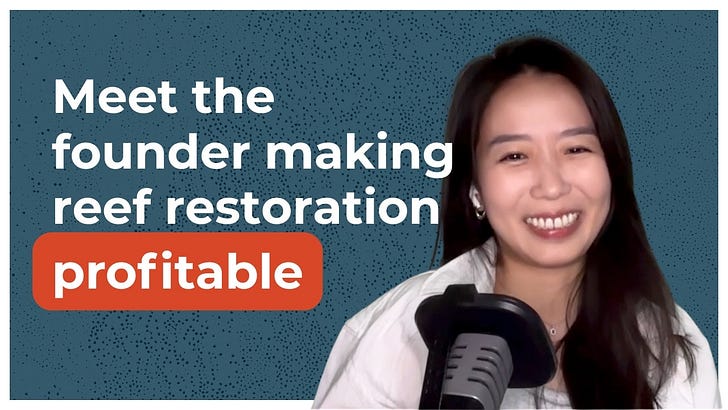

Two years ago, Ella Peinovich wasn’t sure her company would survive.
Today, Powered by People—her platform connecting 500,000+ artisans across 100+ countries to retailers like Nordstrom, Bloomingdale’s, and West Elm—just hit its first million-dollar revenue month. They’re on the path to profitability. They recently became B Corp certified.
What happened in between is a masterclass in what it actually takes to build a world-positive business that lasts.
The Conviction That Started It All
Before Powered by People, Ella built SOKO—a jewelry brand employing 2,500 artisans in Kenya to produce high-quality pieces for the US market. She sold into major retailers, built sophisticated supply chains, and eventually exited.
But she kept seeing the same problem: a single brand can only create so much demand. If she really wanted to maximize impact, she needed to build infrastructure that could serve thousands of brands like hers.
The deeper conviction came from watching what technology typically does to workers. On a visit to a watch factory in China, she saw one person managing six CNC machines—doing work that used to employ 36 people. The productivity gains went to the owners. The workers were left out.
“Why does that have to be?” she asks. “Technology and the gains of technology really need to be shared with everyone... you’re benefiting people with technology, you’re not displacing them with technology.”
That belief—that technology should amplify human creativity rather than replace it—became the foundation for everything she built next.
The Weight of Purpose
Here’s what rarely gets discussed about social entrepreneurship: it’s actually harder than building a regular business.
Not just because markets are tough. Because when you claim to stand for something—sustainability, justice, dignified work—everyone holds you accountable. Your investors. Your customers. Your own team.
“Most businesses that are just for profit don’t have to defend why they call themselves the best of something,” Ella observes. “It’s a sales pitch. For us, it’s not. It’s how we work.”
Her team, she notes, are smart, passionate people who “keep us accountable to this mission.” They challenge the company constantly—which is an asset, but also means every decision carries extra weight.
This is a feature, not a bug. But it makes the hardest decisions even harder.
When Everything Changed
Post-COVID, Powered by People was thriving. They were the go-to online destination for global artisan supply. Their wholesale model—buying inventory, attending trade shows, acquiring customers—was working.
Then came logistics nightmares. Tariffs. Anti-globalization sentiment. A retail sector contraction that squeezed everyone.
The business that had worked stopped working.
Rather than abandon the mission, Ella rebuilt the vehicle for it. In January 2024, they completed a full transition: from wholesale (buying inventory, customer acquisition costs, physical trade shows) to a pure digital marketplace (no inventory risk, no CAC, retailers integrate directly).
“We were doing a lot of hedge bets in the early days,” she admits. “We’ve just been shrinking and focusing on what actually worked.”
This is true for so many scale-up founders: subtraction leads to scale, not addition.
The new model is leaner, stronger, and more scalable. Artisan products appear directly on Nordstrom.com. Orders flow through automatically. Powered by People takes a cut without ever touching inventory.
Same mission. Radically better execution. According to Ella, “I feel better in the business. It’s easier, it’s stronger.”
The Framework That Keeps You Focused
When you’re a purpose-driven founder navigating hard times, the temptation is to compromise. Chase a different market. Dilute the mission. Just survive.
Ella’s protection against that drift? Jim Collins’ Hedgehog Concept—a framework she returns to for every major decision.
The idea is simple: find the intersection of three things—what you can be best in the world at, what drives your economic engine, and what you’re deeply passionate about. Then ruthlessly stay inside that intersection.
For Powered by People, that means: technology that empowers people (not displaces them), beautiful products consumers actually want, and the independent artisan sector they love serving.
“We don’t want to be disingenuous to any one of our sort of critical values,” Ella explains. Every opportunity that doesn’t pass all three tests gets a no—even if it would make money.
This discipline saved them when the market turned.
The Hardest Decision
To fund the pivot—to survive long enough to prove the new model—Ella had to make cuts. Two years in a row, she led layoffs at a company whose entire mission is providing dignified work.
“When you’re a business that takes a lot of pride in employing people and providing dignified work,” she says, “that is the hardest bit of the job.”
She felt the weight of it personally. These were people who believed in her vision, who invested in the culture she built.
“It just made you feel like, wow, I let them down, I let myself down.”
But the math was brutal: if the company dies, the mission dies. The only way to serve 500,000 artisans long-term is to survive short-term.
“You have to fill your cup before you can overflow for others.”
She wasn’t asking anyone to sacrifice more than she would. She wasn’t the highest-paid person in the company. She took haircuts before asking others to. When the cuts came, she led from behind—heads down, doing the work, giving space to a team that needed time to process.
“There was a period there where, to be honest, I don’t think they wanted to see me around.” She was leading from behind, heads down, and she told herself: “This is also okay.”
The rebuild wasn’t about rallying speeches. It was about results.
“Success honestly is the only thing that allows us to really replace any of the sort of shared trauma in an organization.”
She kept her head down, kept working, kept producing. And eventually, the numbers turned. The people who stayed saw the million-dollar months arrive. They saw the model working.
“People have actually said, ‘You were right. This was the right decision.’”
The Proof
Today, Powered by People serves over 3,000 businesses representing roughly 500,000 artisans from more than 100 countries. Their products reach 200 million consumers monthly through partners like Nordstrom, Bloomingdale’s, West Elm, and Anthropologie. Over 65% of their network is women-owned. 60% serve rural populations.
They hit a million-dollar revenue month in July. Profitability is guaranteed.
And that freedom matters—not just financially, but philosophically.
The path to speaking truth runs through sustainability. You can’t be radically honest when you’re always fundraising.
What Ella Wants Founders to Know
A few things she shared that stuck with me:
On vetting investors: Every conversation is two-way. If an investor sees your focus on impact as a limitation rather than a competitive advantage, “that is a clear signal to me that you’re the wrong person.”
On managing your board: Keep them informed, but don’t ask permission. “I’m going to let you in on everything that’s happening, but pretty much as I’ve already solved it.”
On finding honest feedback: “I don’t want people to just tell me what we’re building is great. I think that’s a disservice actually to entrepreneurs.” Seek out people who will tell you the truth—then keep pushing until you hear the hard stuff.
On who you surround yourself with: “Be ruthless down to the friends that you choose, the partner that you have in life, the investors that you surround yourself, the advisors that you have.” Find people who inspire you and want to build you up.
The Mission Never Changed
Ella didn’t pivot away from her purpose. She pivoted toward it.
She found a model that could actually sustain 500,000 artisans for the long haul—instead of burning out trying to do it the hard way. The marketplace flywheel is faster, lighter, more scalable. More artisans can participate. More retailers can access the catalog. More consumers can find products that align with their values.
“We’ve never steered away from our mission,” she says. “How we deliver that has evolved a lot.”
That’s the real work of building something that matters: holding the mission constant while letting everything else evolve.
The mission is the constant. Everything else is variable.
Want to Learn from Purpose-Driven and World-Positive Founders?
Have a founder we should interview? Have them apply here, or nominate them here.
Transcript
Mark Horoszowski (00:13:26):
Ella, welcome to the Helping Billions podcast. Really excited to have you on the show today.
Ella Peinovich (00:13:40):
Great to be here. Thank you, Mark.
Mark Horoszowski (00:13:42):
Yeah. So we’ve stayed in, I’m going to say in touch over the years, but it’s been kind of like, oh, I know a lot. And then we don’t catch up for a while and then we kind of catch up again. And so from afar, it’s been really cool to see this evolution, not only of Powered by People, which I really want to dive into, which is of course your current work, but even the journey of how you got here, before Powered by People, you were working in this space as well of helping smaller artisans and producers find and access markets for their products so that they can grow more sustainable livelihoods. At least that’s my interpretation, but can you kind of talk me through of like separate from the actual business that we’re going to dive into, what here gives you the kind of personal fire to chase this mission that you’re on?
Ella Peinovich (00:14:36):
Yeah, you’re right.This has been a life mission and I appreciate, Mark, that you recognize you’ve been probably dotted my life in many ways along that journey. So it has been an evolution from Soko when I built my own independent jewelry brand and then to ultimately building Powered by People, which is a platform for other independent brands like Soko. But it has all been built from a singular mission. I came out of MIT, I studied systems design and I really believed that technology needed to be used within the creative sector to enable human capital rather than displace it. I kept wanting to build a business that I wanted to see in the world. So it was very much driven by my own sort of personal mission to have more sustainable options, local options. As a consumer, I wanted product that ultimately represented my values. And so I created my own brand, saw how difficult that was to sort of build your own market opportunity, be the financier, the logistics manager, the quality manager, and then ultimately decided after exiting and selling Soko, I wanted to build a platform for other independent brands so that ultimately there was a bit more consolidation in the space.
(00:15:41):
And all still with this mission of how do we use technology to, in Soko, it was really in the production management, the quality management, the traceability of supply chains within that product. We were able to produce mostly on demand product for our consumers and we’ve translated that into Powered by People by creating a marketplace platform for independent brands to digitize their businesses, get them online, bring them visibility, finance those transactions, and ultimately support their fulfillment and competitive nature into the US retail market today. So all still very much with this mission of how do I support other independent brands and artists who I love and appreciate. And that’s kind of from my own personal sort of family history. My parents are both artists, but kind of bringing in my skillset and something that was uniquely what I believe to be missing in the world, which is how do you apply technology and robust supply chain systems and innovative business models within this sector to really scale?
Mark Horoszowski (00:16:37):
I love that you brought your parents into it. I want to click just like a little bit deeper because one thing that’s always interesting to me is like, like you say some of these things, like I wanted to buy products that align with my values and were more sustainable and like I knew who made them and where they were made and how they were made. I think a lot of people want that, but you took this like very big step of being like, “I’m actually going to go produce that. “ What is it about, I don’t know, do you have like an experience from back in the day or what was the thing that got you to go out and actually take such a big
Ella Peinovich (00:17:11):
Leap? Yeah, I do think there’s a value set that I learned very young and that came from my family that ultimately if you identify a problem, then you’re likely the best one to solve it. It is in identifying a problem that oftentimes you recognize that there’s a gap. And so I think that that is something that I’ve taken through everything that I do. I think actually this is summarized very well when I’m an Ashoka fellow and Bill Drayton, he actually had basically said this and I’m going to miss interpret, but how I interpreted really this Ashoka Fellowship is that you learn at a young age, at some point between 12 and 14, that you have agency, that you learn that you are the change maker, you’re the one that can implement the change in the life that you want to see. And I do think that that’s something that has continued to stay with me from my childhood, whether it was mission trips or it was ultimately just working and volunteering in my local community, that I wanted to bring my skillsets and something that was uniquely my ability to something that I was passionate about and ultimately something that could make a big change.
Mark Horoszowski (00:18:14):
Yeah. Thank you for sharing that. It’s fun to kind of like go back in time just a little bit. There’s probably a whole podcast just about that, but what we really ultimately want to get into is like, how do we build these businesses that kind of live in this tension between like purpose and sustainability and profits. But before like really getting into the current of Powered by People, your story to me is so interesting because you built a brand and that is hard. You did this once and I’m sure you have some battlescars from that experience and then you were like, “Cool, there was this bigger problem that I saw and like I’m going to go back into a bigger yes market, yes, potential for impact, but also bigger challenge.” What for you was like that impetus to go, “Okay, I saw all these challenges that small producers have.
(00:19:09):
I want to go build a platform in order, make it easier for them to get bigger and mass distribution.” What motivated you to take that leap into this bigger opportunity and challenge?
Ella Peinovich (00:19:22):
Yeah, I think you even said it, right? I thought building a brand was the best way to support a network. And actually inside Soko, we had 2,500 independent artisans that were producing for our brand and I’m wearing some of it today. So it was a jewelry brand selling into the US market, all handmade in Kenya, now gold plated, it’s a high quality product that was made in volume and it was made to highest quality, but from this distributed network. And I have so much pride in what we built in that organization, but it did meet a point where the demand is limited for a single brand. And I had actually built the roadmap inside my last year in Soko for what is now powered by people, which is how do you take a platform and a manufacturing solution is what we had inside Soko. And ultimately, how do you open that up to other brands?
(00:20:13):
How do you create more of a platform and a technology platform where the efficiencies that we kind of learn again were able to be then applied in a larger and bigger way. And as an entrepreneur, I think Mark, we all sort of ask ourselves like, “How’s our time best spent?” We are visionaries, we’re seeing where it’s going, we see and we can feel the pulse of traction and momentum. And I think there’s a level of ambition there. I want to also apply myself to being and having as large of an impact as I possibly can in the world. And I saw a limitation to that within a single brand. And so ultimately decided I had to exit my own brand in order to not be a competitor, perceived as a competitor starting a platform, but ultimately as an asset to the sector that I could build this consolidation and resource sort of platform for other independent brands like my own in order to achieve the same level of success that I had in my own business.
(00:21:05):
And so I do think there’s a lot of battlescars in that, but I think there is just this, how do you pick a problem big enough? And again, where you feel that you want to apply yourself to that problem and it’s a big enough market, there’s enough independent artisans around the world, there’s a big enough consumer market that can really hold this mission at a really global scale. And so that was something that was really interesting and challenging to me.
Mark Horoszowski (00:21:31):
Yeah. You labeled something there, which is like, as entrepreneurs, there is a lot of effort that goes into building these things, right? And like if I fast forward in life, what do I really want to be known for? What do I want to accomplish? What do I want to look back and know that I at least gave my best effort to try? And I think there’s a theme of that that I think I’ve heard in these conversations and it’s a cool kind of like imagine the future and then look back, right? You’re going to regret the things that you didn’t do and here’s just like another story that you’re sharing of like, I went for it and I did it. And now let’s talk a little bit about like current reach and volume. So talk to me, how many different artisans are you supporting and also like what are some of the measures that you kind of look at to say, “Yeah, this platform’s really working.”
Ella Peinovich (00:22:26):
Yeah. Well, ultimately I think we today support over 3000 businesses. We estimate around 500,000 individual artisans from over a hundred countries around the world are currently represented in Pard by People’s Digital catalog. We then provide US distribution for just a handful of those brands in our drop ship distribution into Nordstrom’s Anthropology, the West Elms. We’re just launching with Bloomingdale’s right now. So some of the biggest retailers across the US market are ultimately our distribution channels for this global, so artisanal
(00:23:01):
And really handmade and independent, I would say. So it’s really a bridge of independent brands from a sustainable home. We look at clean beauty and then ultimately independent fashion as kind of our core categories of brands from around the world that we want to provide retail distribution for them into the US. And so it’s about, we estimate around 200 million consumers that actually can view our products based on our distribution network today, every single month. And that’s now with this kind of global network that we’re able to really provide this digital access for. But I think back to success, it’s always, I think the reason why I’ve chosen a for- profit business model in many ways, as much as I’m purpose driven and I think that that is ultimately what gets me up and motivates me every day is really supporting my community, my people, the artists, the creatives, the designers of the world that I think just really express humanity.
(00:23:53):
They are the people that I think deserve the most, right? And I’m a technology person, I’m an engineer, a builder, and a designer in my professional career. And I think ultimately that’s what I’m bringing to the equation here. And so I think ultimately at the end of the day though, it’s around providing economic inclusion. It’s around providing sort of business growth for these individual businesses. And I’ve always believed that, again, if I can help other people to be bigger and sell more and be more profitable, ultimately we can be successful. So that Venn diagram of our impact and our business success are 100% aligned. But ultimately, it is sort of a monetary incentive that is a magnet that pulls people through adopting new business tools, adopting new financial services, buying a mobile phone maybe for the first time, or implementing and utilizing a new technology platform like Powered by People.
(00:24:51):
They’re willing to do that if they know that there’s a monetary incentive. And so I think it is a motivator for everyone. I don’t think I’m misaligned with my community and my impact goal because we have a for- profit mission. I think it’s actually what they expect from us as well is that they’re able to build their business and be successful. And so I just think commerce and consumer driven, demand driven solutions, market driven solutions are a great way to sort of test and validate our business model, but also that the products that we have are ultimately the most desirable in the world and there’s just not that option and choice. And so we provide that to consumers as well. And I think that alignment is something that I think fuels everyone, that the pride that we get from having this beautiful product listed on Nordstrom.com is incredible.
(00:25:31):
And that’s very motivating for me. Yeah.
Mark Horoszowski (00:25:33):
Yeah. I could see how it would be. And I mean, I think if you go talk to your average consumer, right, I think they would say, “Yeah, I’d rather have something that aligns with my valueses sustainable and I know who made it. “ If that choice is often not there, right? You introduce points of friction and then drop off is there. So it seems like you’re really getting rid of that friction. And if you go to these, you said over 500,000 artisans. I know that’s through a smaller number of brands, but it’s still a massive reach. Similarly, like these artisans, these producers, this is their livelihoods, right? They’re generating income here. And so of course they want to grow sales. And I think one thing that strikes me about your business model as well here is that, and if I understand it right, is that the producers, the artisans, you benefit when they benefit.
(00:26:19):
They have to actually make sales in order for you to start recognizing any profit. That’s correct?
Ella Peinovich (00:26:24):
That’s right. Yeah. So our business model, they’re able to use the technology for free. And actually this was kind of learning from being a global social entrepreneur is that really having a SaaS solution and subscription model in a market where a lot of our artisanal network when we first started out was very much the handmade artisan, they didn’t have a credit card to go online and pay for a subscription. And so it was entirely success based. We now are global. We now also represent US independent brands and Canadian independent brands, these small women owned businesses across the globe, indigenous based businesses, just independent retail is really what we focus on. So there’s now more of that capability of online subscriptions, but ultimately that wasn’t where we started. And so I think we just tied it to success. They’re able to access this market and when we get a sale, we take a portion of that sale and distribute that to them.
(00:27:12):
But we provide the distribution, listing digitally, cataloging their product, getting them up online. We then manage payment solutions for global artisans as well and even manage the logistics solution. So it’s quite a bit of value addition that I think we’re doing that ultimately would not be possible as an independent brand on their own, just really cutting down costs and consolidating where we can.
Mark Horoszowski (00:27:32):
Yeah. Well, and I think what’s so interesting here is you live that, right? And I think that’s such a entrepreneurship fundamental is like those that have experience facing the problem are the best positioned to then actually build the solutions to those problems. And I think that speaks here to business as well. I’d love to go back in time a little bit to like, I don’t know, first dollar, right? Do you remember when you got your first validation that this business model was really going to work?
Ella Peinovich (00:28:12):
Yeah. Ultimately, our first customers were really our friends. I ultimately was a brand owner and then came back and was trying to build a platform for brands. And so it was my own business partner was my competitor in the market. And so we went out into the market and we asked people to join our platform and we said, “We have access. We’ve built a brand. We know what it takes to sort of build this market access, have faith in us.” And we actually had a lot of early, our first 500 brands that joined us ultimately were those that were through our personal networks. It’s now expanded beyond that, but ultimately it was in building a reputation and maintaining good relationships with either people in the sector or investors that five of our investors in my last business came in and seeded this business. So I can definitely say that it was through building good relationships and having had a level of success and trust that was built up in the market that ultimately allowed us to kind of get a kickstart into this one, which is why you are able to take on that bigger challenge I think in many ways and kind of continue to go to the next level because I wanted to solve the problem that I had when I was running
(00:29:20):
Business. And so I knew how to pull in other brands that were having those same challenges. There wasn’t one thing I think that kind of kicked it off. I do love still, I would say going to trade shows because all the brands that are there, they’re trying to break into the US wholesale market. And I do remember going to my first trade show when I had not my own brand, but I was representing many brands, just the amount of pride I had in having all that product there and that they were bought in
(00:29:46):
On this platform together. But then trying to get people to understand this as a technology platform was probably like the retailers that were passing by, that was a little bit of a harder sell. And so I definitely think it took us a little while to figure out the product market on the retailer side, but we We’ve done that now and again, have some of the best sort of retailer enterprise level retail partners in the market today, Nordstrom’s, the Bloomingdale’s. So I think we’re quite excited about just those proof points continue to bring more. We just launched with Design Within Reach as an architect, professional architect myself and designer. I think that was something that I was really proud of. So I think seeing this all kind of come full circle has also been really exciting from those kind of early days and those early conversations.
Mark Horoszowski (00:30:30):
Yeah. Very cool. Can we kind of go, because I think it’s easy to say like, oh, I went and I built some trust and I got some of my friends or peers in the industry on board. But really like in the weeds on this one, because it’s still a big ask, right? You’re putting yourself on the line. They’re like, “Well, even if I know you trust you, it’s still like an unknown thing.” If you kind of look back, what made you successful at building these early partners when Proof was not there yet?
Ella Peinovich (00:31:02):
Yeah. I think marketplaces in particular I think are very challenging because you have to build ... The question is always which side are you building first? Is it the supply side or is it the demand side? And I think where’s the biggest bottleneck? I think everyone’s looking for demand, so it was a little easier to get our friends on board to join the platform. But ultimately it was, I think there are always those early adopters, those visionaries. I remember my mother ran a retail shop. She was an artist and she had a retail shop. She was our first customer in my brand, in my Soko jewelry brand. Similarly, actually empowered by people. One of the retail shops in my hometown was the first one that bought wholesale from us. And so it was a great way for us to sort of have that personal dialogue with them and say, “How’s the product selling?
(00:31:47):
Did the platform work? What were the challenges that you had? Did the payment reconciliation happen in the way that you thought?” And so I definitely think that they were a lot more honest getting into a conversation. I think as an entrepreneur, one, we always are trying to understand really the root cause of whatever problem you’re trying to solve. I don’t want people to just tell me what we’re building is great. I think that’s a disservice actually to entrepreneurs is just to tell them, “Oh, what you’re doing is amazing.” Because I think a good entrepreneur is curious. Good entrepreneurs really trying to solve a real problem. And so I’m always like, “Who’s incentivized to actually tell me the truth?”
(00:32:23):
Okay, one of my family friends who ran retail shop in my hometown, I’m going to give her $500 of credit to buy the first order of goods and see how she likes it. And what she picks and what she chose to pick and what she didn’t choose to pick, understanding that, having too large of images that didn’t load when she was in this small town, rural town that the internet that she had didn’t allow her to load our services and the best user experience as well. So all these little nuanced things that ultimately came out of having really a hands-on personal experience in like small buyer circle with our first kind of users was I think really, really critical. But also I think just finding those people around you that one wants you to succeed. And ultimately I think that that was the case, this was a family friend, but that also want to tell you the truth, that aren’t just going to tell you what you want to hear.
(00:33:13):
And one as entrepreneurs always look at incentives, like who’s incentivized to tell you the truth and then ask hard questions and expect to get bad feedback. Don’t actually persist until you get bad feedback because that’s when you’re getting to the honesty of it. I love that. And then ultimately being able to pivot on it, act on that, change things, go back and tell someone, “Hey, I listened to you and I improved on this. How is this experience now?” And actually I’ve always said running a consumer business, that’s when you really get a customer for life is actually when they complain about something and you solve that problem for them and they see that you listened and you cared, that alone will build more loyalty with the customer if you solve their problem than the fact that they had the problem in the first place. So lean in to those that are your probably biggest opposition in the early days because they can be your biggest fans as well and your biggest advocates.
(00:34:02):
And I think that’s always been, I think something that I’ve kind of thrived on is the good and the bad feedback.
Mark Horoszowski (00:34:08):
Yeah. Yeah. I love that. I think there’s that, it might be a Bill Gates coat where you learn the most from your most unhappy customer
(00:34:16):
And if I remember from, there’s like a Disney principle in the theme parks, it’s like the staff is like specifically trained to be on the lookout for when things go wrong, like a kid drops an ice cream, that’s where you can insert like moments of magic. And so yeah, really interesting to see you kind of applying that obviously in a very different setting than a theme park, but using that as like really an opportunity. But I think just to emphasize that point of like curiosity, it seems like you had so much curiosity really on both sides. And here is where I’d actually like to switch a little bit, kind of talking about getting some of the first brands on the platform, but then you had to go convince Nordstrom and Etsy and these others to be like, “Hey, distribute this. Let us put these products here so that your consumers can do that.
(00:35:02):
“ In those like very early stages, how did you get your first like big name brand to agree to that?
Ella Peinovich (00:35:10):
Yeah. I think we were very good about building a brand from day one. My business partner, Allison, is phenomenal at this. She actually has built brands, sold them within Club Monaco and sold Ralph Lauren. She has had a lot of experience at this very large scale kind of retail level brand experiences. I think we really, from day one, acted really big. And I think that how we showed up at trade shows, we publish our own magazine, the way that our website is, it is entirely curated. And I have to say Allison has that beautiful touch to everything, right? And we try to catch up to that with our service level and our technology implementation. Those things take a little bit longer, but the brand is something that we were very intentional about who we brought in and who we partnered with on our supply side, high quality, very well curated in a sense.
(00:36:04):
And we’ve been able to expand beyond that, but it allowed us to build this incredible foundation. And so I think the trust was there just visually upfront and then we were able to deliver on that. So that gave us West Elm as our first major client. They actually were the ones that tested out our first sort of drop ship implementation. We then bought all the product to curate that experience for them. We no longer buy product from our suppliers. We actually now just landed in our fulfilling that through kind of a warehouse sort of Atlanta. But ultimately in the early days, we wanted to control one side of the transaction to make sure we had really heavy retail customers. And so I think that was something that we were always kind of ... Which side of the coin were we really trying to leverage or build with?
(00:36:45):
And in the early days it was build a technology platform and distribution and catalogs for our maker community and consolidate this incredible catalog. And then it became about retailer acquisition. And that was kind of the marketplace, kind of double sided piece of this. And now it’s been a natural flywheel. We also had to convince some of our early brands that were partners of ours. “Hey, where are you already getting orders? Can we somehow support you with financing? Can we support you with the logistics, the payments,
Mark Horoszowski (00:37:10):
We’re
Ella Peinovich (00:37:10):
Not going to charge you commission, but can we somehow get embedded into these transactions?” That was ultimately also where we found that because our tools were more effective, they started bringing on their buyers into our platform for use order management, ease of payments and logistic management as well. So that was kind of the flywheel for us to be able to say, “Okay, we get on great brands. We did that very well in the day one, but then how do we get them to help us attract great retailers?” And now that we have great retailers, we’re only getting more amazing brands. And it’s that the marketplace flywheel, good assortment attracts good buyers, good buyers brings on great assortment. And then now we’re just really on performance optimization. So it’s just an evolving, snowballing, really incredible flywheel that we’re on right now in our scale.
Mark Horoszowski (00:37:57):
Yeah. Gosh, so many places we could take the conversation, but I think the one that I want to start moving towards is some of these tension elements. And I think the ... I want to use the retailer as an example, right? Where from the impact side, I could imagine that you have a couple uphill battles here, right? It’s like, hey, there’s this really strong mission that you have to support these artisans and more sustainability into products and you are fighting uphill because people don’t totally understand like, wait, are you yourself a producer? Wait, but you’re a tech platform and how exactly does it work? And then there’s like a novel, I think one of your innovations as well is how money is exchanging hands and where you’re inserted in that conversation. So you’re kind of doing a lot of innovations at once in order to bring this to market.
Ella Peinovich (00:38:55):
Yeah.
Mark Horoszowski (00:38:55):
What was the hardest part about that? And ultimately, how did you end up navigating probably the confusion that some of these brands would have in terms of like, wait, but what are you actually as powered by people?
Ella Peinovich (00:39:10):
Well, one, I think it was never about us. I think as much as our brand kind of speaks to a sector and an ethos, I think we’ve always led with what problem are we solving for you in our partnership? So admittedly, we’ve made a lot of evolutions. We’ve never steered away from our mission. Our mission has always been, how do we provide independent brands, mainstream retail access? How we deliver that has evolved a lot. And so to your point, we actually, in our organization early on, like again, we had to be the first buyers so that we could acquire our supply side. Once the supply side was really consolidated, we had to, to get on that big major retailer, as I mentioned West Elm, we had to buy the product and we had to be the supplier. And so it really became proving out both sides.
(00:39:59):
Now they’re starting to really ... Now we’ve removed ourself from the equation and our technology does all the work and ultimately that has allowed us to have no customer acquisition cost. We have no inventory risk in our current business model, but that wasn’t the case in the early days. We had to take some of that on to kind of prove it out. So I do think it was, in the early days, it didn’t look super scalable. And I think if anything, it was less of a ... I think our value has been understood by both of our customers, maybe not holistically by any one of them, but I think our value proposition to each side of the market has always been, I think, pretty well understood just by, do you want sales? Great. We can help you grow your sales and allow you to grow your sales through sort of our solution.
(00:40:41):
But I think ultimately it is through, on the retailer side, it was really around compliance, high quality supply, and building that trust on the retailer side was I think super important. I wanted to say though, I do think that for us, I’ve always believed that technology access really should be shared. So again, this notion of our mission has never changed. How we deliver has changed. And I think we continue to simplify this business model. And I want to get back to tensions, but I think it is important for me to say that like, when it comes to sort of how do I apply myself to something that I really believe in. Technology is something that I personally am a huge fan of. I believe that technology needs the productivity gains that we have and the access to technology should really be shared with more people around the world.
(00:41:31):
And ultimately this creative artisanal sector is one that I’m super passionate about, right? So I think that ultimately the benefits of that though, oftentimes when we think about technology, I went to China and I went to see a fossil watches factory and I saw them with CNC machines that had replaced each one of them was doing the work of six people and there was one man that was managing six machines. So there’s one person that was employed where there used to be 36. And you’ve seen this evolution of technology in many ways and really benefiting ultimately the corporations and the mass production, that productivity gains going to the owners of those businesses and leaving people out of the equation. And I’ve always said, why does that have to be? Technology and the gains of technology really need to be shared with everyone. We need to make that more accessible so that you’re not ... Ultimately you’re benefiting people with technology, you’re not displacing them with technology.
(00:42:19):
And I think that has been something that’s always been, for me, just a personal mission in life is like finding those dichotomies, artisanal and tech, putting those together and trying to say like, how can we make something really special out of that? And ultimately where’s the gap? And I think that’s interesting to people that’s also, there’s such a massive opportunity that’s been unaddressed. We estimate that there’s 300 million individuals that are in this sector and largely they are left out of technology and kind of the online e-commerce space. And if you’re not on e-commerce today, you don’t exist. So we’re really trying to bridge that gap of like digital inclusion. I just think that’s a big problem and a fascinating problem. Now when I go to some of our sort of early conversations with investors, and the investors I have, let me tell you, are incredible, but a lot of the ones that I didn’t let into this business really wondered why I was choosing to apply this thesis to really benefiting humans and why I spend the time there when there’s not efficiencies.
(00:43:16):
I’ve been told that my business model, there was someone who came in and did thesis research on my business model in SOCO and said, why are you working with artisanal community? Go to China and go do mass production. You can take all those beautiful designs that you make and you make so much more money. And I’m like, I think they missed the plot of like why we’re doing what we’re doing, which is actually to build communities, support them, have better product out in the market that ultimately brings humanity together. I really do believe artists are sort of the best mirror of our society. And so how do we make that more accessible? And I think that’s always been the thing for me that I continue to try to solve. But definitely it’s from a commercial perspective. I definitely think there’s a big enough opportunity and commercial opportunity, but is it the easiest?
(00:43:58):
No. And is it the easiest way to make money in large amounts of money? Absolutely. If you want to do that, please go to mass production in China, but that is not what we’re trying to do here. And I think there’s enough consumers that are starting to react to the sheens, the tamos of the world and are saying, no, we want an alternative to this
(00:44:15):
Mass produced crap really in the world that’s filling our landfills. We always say when you’re buying something, you know if it’s cheap, I’m sorry. If you’re not paying the price tax, someone else is. And that might be someone that is being paid less than fair wage or it’s the planet because it’s being raped of resources that ultimately is being used in the making that product. So support your local community, support buying from independent brands that aren’t doing this in a way that is not scalable and sustainable for the community and the people that we’re in with the world and the
Mark Horoszowski (00:44:44):
Planet that
Ella Peinovich (00:44:44):
We’re in.
Mark Horoszowski (00:44:46):
Yeah. It’s so well said. I’m like, yes, this is why we’re having this conversation, right? This is why we started the show is there’s so much advice out there for entrepreneurs to say like, “Yeah, this is how you go set up that plant in there, right? This is how you go sell on there.” And I think there’s a lot that you just said right there that I just want to emphasize and I love the fact of like, why are we doing this? Is it just to get a ton of money or is it actually like fulfill this deeper personal mission? And I think there’s a lot of supporting evidence and anecdotally we’re seeing it across almost every interview on the show. It’s like the purpose that comes from standing for something more than money is like even when things are hard, it really keeps us going.
(00:45:31):
And the other piece, and I want to reflect this back to see if like you agree or like if I’m hearing this right and if the reflection is right, but when you were building up this marketplace and like you knew that you needed to use technology in order to like bring this to scale, but nobody out there, it seems like on the artisan side and on the distributor side or the retail side were like necessarily shopping for a software solutions, but you knew their problems, like you were intimate with like what they were trying to do, like get more novel products in front of customers or distribute to more customers in an American market as an example. So it seems like you were really, really tapped into not what you were building, but what they needed and what they were looking for. And you were able to then like translate your value to them in those terms and then you’ve just stayed laser focused on those and you’ve been continuing to innovate in the backend.
(00:46:34):
And I’m curious, is there a mental model? Is there a framework? Is there something that you’ve like used to help you and your team stay focused on understanding what they’re actually willing to buy versus what you are building?
Ella Peinovich (00:46:54):
Mental model for our consumer pitch, for me, it is always understanding the pain point of whoever I’m talking to. I do think that that is something that, and what motivates people and what incentives are there for people. I don’t know what that comes from exactly, to be honest. I think it’s more just curiosity and as a designer, I think I’m always trying to find solutions and build for problems. So maybe I’m kind of constantly seeking those out. But as a business, I can say that we set this out in ... I actually did, I knew you were going to ask this question or it was one of the potential questions. So I pulled out what I believe is sort of my great framework I always go back to when I’m starting a business. And in both of my businesses, I would say I would encourage any social entrepreneur to pull this Jim Collins Hedgehog Theory out.
(00:47:40):
I’m sure this is referenced before, but I did pull it out so that I didn’t kind of misrepresent it, but really this is about building that clarity and simplicity and knowing that one big idea and the whole concept of the hedgehog, there’s a story behind it and you can read the book, but ultimately the Fox, they’re really good a lot of things, but the hedgehog is good at one thing, which is defense actually, but ultimately it is just what is that one thing? What is that one big thing that you can be really good at and you can win at? And I think just being so laser focused as a business on that, I think is sort of the guiding principle. So even when it comes to customers, I think that we don’t want to be disingenuous to any one of our sort of critical values.
(00:48:21):
And so the hedgehog theory really has, it’s a Venn diagram of three basic things, which is, what are you the best at in the world? What is your unique skillset? And I’ve talked about this a little bit already. For me, that is, how do I bring technology solutions to really enable people? That is the thing that I’ve always believed in. Supply chains that are empowered by technology. How can technology be used to really amplify the human spirit and creativity rather than, again, displace it? That is implied in our business because we are ultimately a technology platform. What drives our economic engine? We sell beautiful, great product. That is our brand that I talked about, the thing that we’re selling, the products that we believe that the consumer market really wants, and we can deliver on that. And we’re uniquely positioned as a team to ultimately do that as well.
(00:49:06):
And then what are we deeply passionate about? And that’s our artisanal sector. That’s our supply side. That’s our unique independent brands. That’s that independent fashion, that’s sustainable home, it’s that clean beauty that we want in the world. And so you bring these three things together and you just need to make sure that you’re not giving up one of them. And so you ask yourself, it becomes guiding principles as well. How do you kind of remain true to that? So can I make a lot of money selling this product, which might be non-organic polymer based skin product? Maybe though it’s not aligned to my values or it’s a product that someone else ultimately can get to market, so it’s not uniquely positioned to us. So you ultimately kind of try to find where is that kind of sweet spot between all these three things. You don’t give up on your impact or you don’t give up on sort of building for a really unique solution through your technology just to make the money.
(00:50:02):
It has to be sort of balanced by these multiple things. And so, I do think there’s also people that come in and are bleeding heart about it and they say, “Okay, we need to only work with the most disadvantaged artisans around the world, but we can’t get little up on our technology and ultimately the product isn’t desirable and we can’t sell it. “ So there’s also the downside of also being an impact oriented business is like it has to be balanced between profits, purpose, and ultimately that thing that we’re passionate about.
Mark Horoszowski (00:50:29):
Yeah. I love that. So I want to reflect that back and we’ll add it to the show notes as well, but what are you best in the world at? What drives your economic engine? And then what are you deeply passionate about? Where do you have a deep sense of purpose around? You find the middle of those concentric or the middle of those circles, that Venn diagram, and then that’s powered by people. I think we sit here. That’s it. Cool. I love it. That’s it. Okay. I want to shift gears a little bit and talk about company building. You mentioned investors a little bit, some saying, “Why don’t you just go to China?” Similarly, I can tell you that some of the ... I swear some of the worst advice that I’ve consistently received over time of the journey is from the investment and finance community and some good advice.
(00:51:19):
I don’t want to totally talk trash, but yeah, I remember we got something that was like, “Why don’t you become a website maker for nonprofits?” Which is very, very different than our business model, which was already had real validation points of getting Fortune 200 brands and engaging their employees in this whole sector. But aside for another show, so I want to come back to investors. You said something which I love to hear, which is like, there are some that I didn’t let into my business.
(00:51:50):
And I’ve seen you at different stages of the fundraising journey and one thing that stuck out to me, it seems like you almost have a definition of what investors you’re willing to bring in and you take steps to get to know them and make sure that there is mission alignment, not just belief in your business model. How do you do that? As you’re kind of going out, how do you start to think about that and what become your red lines of saying like, “Yeah, we can become a good partner or no, and we should go separate
Ella Peinovich (00:52:29):
Ways.” I 100% believe that every conversation with an investor is a two-way conversation of, we’re vetting them as much as they’re vetting us. And I think every entrepreneur, one, it does start with, do they have a belief in the vision and are they aligned in the big opportunity, right? And not just a financial one, but like ultimately, why are you building this? You can make money in so many different ways, but ultimately, why are you building it and do they feel aligned to that in some way? And do they see our purpose, which can be perceived as niche of working with independent brands. It’s not mass produced in China. Do they see that niche element as a competitive advantage and a moat because we’re uniquely capable at it or do they see it as something that is a disadvantage because we’re limited in their eyes?
(00:53:18):
That is a clear signal to me that you’re the wrong person. But ultimately, I have to say, I have not in this business let in many impact, purely impact oriented investors. We have a handful of them, but I find you also have a, it’s a double edged sword on that side as well, where I already know that my business is based with a massive amount of impact. And if you’re going to not believe in the incredible scale of my business and I have to small myself down to fit your geographic mandate or your impact narrative, I’ve also found that that doesn’t work with me. And so there’s this natural balance of like, let’s be honest, investors are people too. I want to make sure I’m working with people that I enjoy, that believe in what we’re building, that want us to win, and ultimately are also believers in both our purpose, but also in our grand ambition.
(00:54:12):
And I think those investors, whether they’re impact investors or traditional BC investors, we’ve found them on both sides of the table, but I would say they’re the rare breed and those are the only ones I’ve led into this business today. So we have a great cap table and I really enjoy our board and I’ve been very intentional as a second time founder having built and sold a business before and had managed a board in the past. I think I did build this business with a lot more intention for sure.
Mark Horoszowski (00:54:40):
Yeah. I want to come back to some of these points about investors, but just on that last thread, I’d be remiss to not kick on it. Any just like real quick, almost early stage lightning round of like, when you talk about building that board, like what are some of the maybe lessons learned from the first part that led you to say what you just said there about like, “I’ve been super intentional about this go around.”
Ella Peinovich (00:55:01):
Yeah. I always think don’t formalize the board too early, but lean on your investors and let them into your business. I think the lesson I had from my first business to my second business was that I felt that I needed them for money and therefore I didn’t always let them into my big hairy challenges. But on the other side of that, I would say don’t also bring a big hairy challenge without already a solution. So I think there’s an element of keeping them informed and keeping them updated and keeping them engaged that I think is so important in having a successful board that I think we as entrepreneurs maybe either fully dismiss them or fully engage them. I think there’s this heavy middle where you’re like, “I’m going to let you in on everything that’s happening, but pretty much as I’ve already solved it and I’m not asking for permission, I’m just letting you know so that you understand my state of mind, you understand how this business is evolving and you’re feeling part of that.
(00:55:53):
And if you have a big challenge, like we can discuss it. “ But for the most part, I think I’ve found that there’s always a lot of support for that, the good and the bad. And I’ve always been surprised at how much support there is actually as well, which I think is an incredible feeling when they back you and when things get hard or there’s a difficult challenge and you need to solve something quickly for them to support you and not challenge you, I think that is the testament of an incredible board.
Mark Horoszowski (00:56:17):
Yeah. Yeah. It’s great. Minaj from Drinkwell, so earlier guest on the show talked about some of his board relationship and there’s actually a lot of resonance between you two of like actually share quite a bit and during like times of crisis, which they had, I know you’ve had as well, like they become like a strategic force beyond capital that’s really
Ella Peinovich (00:56:39):
Important. You need them on your side when things get hard. You absolutely need them on your side. And so them to be informed is incredibly important, but don’t assume they’re working for you, right? Like they’re to be informed and they’re to help when you need them. Have a clear ask when you go to them, but don’t assume that they’re just going to take a ball of problems and solve it for you. That’s not really their
Mark Horoszowski (00:56:59):
Thing.
Ella Peinovich (00:56:59):
Yeah.
Mark Horoszowski (00:57:00):
That’s yours. As nice as that would be sometimes, but yes, that is our job’s what we sign up for. Okay. So then you mentioned something else, which is, I wasn’t expecting to hear it, but I’m glad I did, which is, okay, on the investor side, there’s two spectrums, right? There’s the organizations that are overly focused on profit, they’re not right, but then sometimes some impact focused investors become essentially almost too limited or create their own extra cost by saying like, “Oh, well, only in this geography or only this specific thing in order to do it, “ you have to then fold your business and your metrics and your reporting to meet this kind of obscure thing that got created because, I don’t know, somebody on the board of that investor just cares about that area or something like that. So I think that’s actually really important to do and to suss out and to find.
(00:57:48):
And it seems like you have these conversations, like you’ve got your hot list of items to make sure there’s business alignment, to make sure there’s impact alignment, and as you’re talking to investors, you’re going through both of those. Now,
(00:58:04):
There is an extra weight when you are trying to tell a business story and a impact story, and I’m wondering if you have any like ...
Ella Peinovich (00:58:19):
I was waiting for this part of the conversation. There is. Okay, there we go. Starting to sweat now. No, I’m just kidding.
Mark Horoszowski (00:58:26):
So in terms of maybe what’s working right now or in retrospect, maybe even mistakes that you made or lessons you’ve learned, what are your tips here? It’s like if you’re an entrepreneur and you’re going out and you’re looking for funding, when you have to tell both a profit story and an impact story, what are the biggest challenges you’ve encountered and then how did you work through those?
Ella Peinovich (00:58:47):
Yeah. I don’t actually make a distinction of like those things being independent of each other. We are what we are, we’ve built a business that we think needs to exist. It has this incredible impact. It also has an incredible potential to be a for- profit, scalable technology platform. And so I think in many ways that part of it’s easy for us in how we explain our business. Now on execution is where I think it always, that’s really where it gets challenging. And I think whenever you put yourself out there and you say, “We stand for something. We are standing for sustainability, we’re standing for justice, we’re standing for a diversification of supply chains, and you’re working with vulnerable people, you are then ultimately going to be held accountable to explain, well, how are you doing that? “ You have to be able to answer that.
(00:59:37):
You have to be able to defend these things that most businesses are just for profit don’t have to defend why they call themselves the best of something in their industry or the most of something. It is not something that ... It’s a sales pitch. For us, it’s not. It’s how we work and it is ... Our business is called Powered by People. We believe that ultimately the people that are in our business business and that are in our community are ultimately what drive us and the decision makers, the consumers are what drives us as an organization. And we believe that has to flow not only to the beneficiaries and the participants and the consumers of our platform, but also our team. And so I find our team are some of these smartest, most passionate people and keep us accountable to this mission. We’ve brought them in, they’ve really invested in this culture and this mission as well.
(01:00:25):
And I think that is an incredible achievement, but also something that I think is an asset to us as an organization, but also something that we have to maintain that a lot of other organizations don’t need to maintain. We have incredible people that are constantly challenging us as an organization as well. And then I think on the investor side, we do have to explain how maybe there are what they perceive as a vulnerability in the business and we could see it as an asset. And I do think that I touched on that a little bit, but we do a lot of philanthropic work where we’ve received grant funding in a large portion of our business. So about a quarter of our funding actually is intended for what we call pipeline development or capacity development in our communities, but it has no commercial benefit to us today, but we believe it builds the ecosystem that in five, 10 years might, right?
(01:01:19):
It also allows us to retain this incredible team. Sometimes on the commercial side, we’re also very commercial where we’re now supporting for profit, US based businesses that maybe don’t need us as much as an organization that we would want to find in Kenya that wants to have that same market access. So we’re always trying to kind of bridge this bigger world of like the commercial. I want to get to a place where we’re just profitable. We had a million dollar in revenue month the other quarter. We’re hoping we can continue on this path to profitability within the next six months. That then gives me the freedom to continue to double down and invest on the more philanthropic components or impact oriented components of our business, which we believe is just good in ecosystem development. But it can be perceived as a distraction. And so I think that it is a challenge that we oftentimes are trying to navigate as social entrepreneurs where you’re also kind of trying to figure out where your model fits and where it can work the best.
(01:02:16):
And I think both on the impact and on the social side, and you want those things intentioned, but also aligned as best you can. And that’s not always easy. Yeah. So I definitely think our team keeps us accountable, but ultimately it is a big challenge.
Mark Horoszowski (01:02:32):
Yeah, for sure. Yeah. Okay. So I want to come back to the grant funding, but before we do, you touched about like your internal team holding you accountable. And I think that this is an area where when you are a social entrepreneur, so you’re existing for impact, we’re using the power of the market in order to do it, and then you start to do things like you really manage your negative externalities, you’re making sure that there’s more pay equity across the team, right? You’re going through all these pieces. As soon as you do that, your job actually now becomes harder, right? At least in the short term, right? Because now your employees will hold you accountable to those things as well. And I know from my own experience, I’ve had somebody say something very similar to us of like, “Well, we’re a social enterprise that you’re shortcutting there and that’s not fair.
(01:03:18):
That’s not what we stand for. That’s not for our values.” And I’m like, “Oh, yeah, you’re right. And how do I balance that against the fact that payroll is coming up?” Assuming that’s true for you as well, and how do you navigate those moments when you feel like there’s something that’s the right thing to do for your employees, but the current business environment or your own just economic health doesn’t create an easy way in order to make it happen?
Ella Peinovich (01:03:48):
Yeah. It is such a real story. I think we always say as entrepreneurs, it’s some of the loneliest jobs. I think as a social entrepreneur, it might even be more lonely in some ways, because you’re right, you’re dealing with just the realities of the world. And we’re oftentimes coming from a position of access and privilege to be able to say that we can choose our values every time. I have an interesting story actually. We had a retail partner of ours, actually in Kenya, it was a retail partner in Kenya, not in the US, that we had a real challenge with. Our employees were finding that they were being harassed by this retailer that was a partner of ours, but we had a good dozen of our brands in Kenya that we were working on a program to actually provide them market access and real jobs and livelihoods opportunity.
(01:04:39):
And it got to a point where we actually decided as a company that we were going to exit the partnership and we gave the choice to the brands because we said, “We don’t want to make the choice on their behalf if they want to continue to work with this retailer, but we need to let them know that we’re no longer able to support that access for them.” We had to do that for our team, but I can tell you, all the brands chose to actually continue to work with this retail partner because they didn’t have the luxury of choice. They needed to put food on the table. They needed to continue to have that opportunity. And I said, “You know what? I don’t like her, but I don’t like a lot of people in this world and we can’t always pick who we work with.
(01:05:13):
“ And it was such an eye opener for me that sometimes we do believe that every choice is binary between good and bad. And I think sometimes that’s just naivete as well. These were a lot of people in this situation that also ... I do think that we were valid in making the decision to leave, but I also think it was just as valid for those artisans and maybe people weren’t as understanding of them. I think it was totally valid for them to choose to stay in that engagement if they felt that they needed to. And I think that has also translated in our business. I mean, one of the hardest things I went through as the CEO of this business is that we grew really fast in the early days. Kind of post COVID, there was this massive consolidation of marketplaces. We were the online destination for global supply.
(01:05:58):
It was a very successful business model. And then post COVID, there was logistics challenges, now with tariffs, anti-globalization. I mean, we’re really in a restriction in the retail sector today. So earlier this year, in January, we actually made an entire transition away from our old wholesale business into our new entirely digital no inventory, no customer acquisition cost model. But in that transition over two years really, I had to lay off team members in multiple situations because we could not make payroll if we were going to continue to grow and maintain the scale of the team because the business had changed, the consumer market wasn’t there anymore and that demand just wasn’t coming in. We were entirely success-based revenue model. And so for me, it was so difficult knowing that my biggest pride is in providing people with dignified work. That is why I exist is to
Mark Horoszowski (01:06:52):
Employ
Ella Peinovich (01:06:52):
People and provide them opportunities and, hey, they’ve invested and they believe in my vision and I’m going to go out there in the world and we’re all going to fight this fight together. And it just made you feel like, wow, I let them down, I let myself down. But ultimately at the end of the day, we had to survive because we do work with vulnerable populations. We are solving a problem still today, and I think we will continue to grow into solving this problem for even bigger populations around the world. But if you don’t survive, you have to fill your cup before you can overflow for others. I think that was an Oprah quote at some point.
(01:07:27):
I do think you need to be able to survive as a business and then being able to really continue to make those choices of really the values alignment to kind of your for- profit agenda. It’s a gray zone though, and I think it is challenging. I’m also the first, I’m not the highest paid in the business. So to be honest, it’s also ... I do think that there are things that we can do as leaders that also represent that we can take haircuts on our own salaries before we cut people. I do think you can have those conversations with your team. I think that these are things that are, again, it’s not also black and white on these decisions that they’re entirely made by myself. I do think that we need to engage with our team, but I think that was some of the hardest things that we had to do were really scale back on a team that was incredible and ultimately just to survive.
(01:08:17):
And I think it goes back to the hard decisions between really feeling like you’re living at your mission and those things that are just the realities of the market that you’re in. So
(01:08:27):
I think we’re on a great path now. I think we’re very excited about kind of our growth and being able to get to sustainability with our existing team, but then we’re going to be in a position of strength in order to make those more cut and dry decisions around really, truly just picking our values every time.
Mark Horoszowski (01:08:44):
Yeah. Yeah. And thank you for sharing all that. And yeah, in a conversation with Ed Booty from Reach52, so earlier guests on the show as well, we were talking about that challenge of like how hard that is when like the people side of this, when like we take so much pride in bringing people on, developing people, like helping grow and then go for business reasons. And we’ve actually seen this both anecdotally from other guests and also in the research as well, that the emotional weight, like the mental toll of being a social entrepreneur is actually greater because of the fact that you care and that’s part of your mission, not just the business health. And then being able to move through that then of course is more challenging. Now it also gives us purpose to like come out of the other side. And so maybe I’d love like some lessons learned from you on this one in terms of what was a really valuable lesson you learned or a tip that you would have for anybody who’s going through that, “Hey, sorry, we have to go through some layoffs.” And then on the other side, what’s your tip for then like building up team momentum and that’s both like your own.
(01:09:57):
How did you overcome that individually? And then how did you bring enthusiasm and hope back into the company?
Ella Peinovich (01:10:03):
Yeah. I think success honestly is the only thing that allows us to really replace any of the sort of shared trauma in an organization. I definitely think one, I had to make this big transition and cut an entire arm of our business that was nonprofit making in order to try to give ourselves enough time to prove out the for- profit business model. That wasn’t fully proven out yet when we made this decision, but again, as an entrepreneur, you’re like, “I can feel the data. I can feel the momentum in this. “ And again, you’ve already convinced people of this really big notion, big idea over the last two years, that wasn’t super successful in the end. It was for a period and then it wasn’t. And I have to build back momentum for this new way and admittedly people are like, “Well, you told us that in the past.
(01:10:52):
How do I believe you this time?” And it only comes back to proof. I think ultimately just seeing the business succeed, people have actually said, “Well, you were right. You were right. This was the right decision.” I didn’t like it at the time, but ultimately we had to make this decision in order to get to where we are today. It’s a better business. I feel better in the business, it’s easier, it’s stronger, it’s a better sort of solution. And I think we maybe lost one or two people that felt like they couldn’t make that transition and we tried to part with them in the most amicable way possible. And I think they’re still fans of ours and we’re fans of theirs, but ultimately it is something that you have to make a decision and sometimes not everyone comes along with that decision with you. But the people that do and they see the success and they feel part of that success, I do think that that allows you to then rebuild with enthusiasm.
(01:11:42):
But there was a period there where, to be honest, I don’t think they wanted to see me around. I just wanted to be heads down. I was leading from behind and I’m like, “This is also okay.” But that is sort of the reality of it. I think
(01:11:56):
How do you get back into your power position to be able to sort of feel confident in making these decisions? I think as an entrepreneur sometimes we’re also making our best bet, but we don’t always ... We’re exuding confidence that we don’t always feel. I do think that, again, it comes back to just having the success in hand. And so I always say, don’t worry, just work through it, continue to produce, continue to do the work, and ultimately it will prove out in one form or another.
Mark Horoszowski (01:12:23):
Yeah. Thank you for sharing that. And I’m curious, are you in the midst of that, both during the layoff and then coming out of the backside, how transparent were you with financials, with the layoff, with what was happening next, with the challenges you were encountering and also the wins? How were you keeping employees aware of what was going on so that they could both understand the decision and see the success?
Ella Peinovich (01:12:49):
I think we, in the early days, I just don’t think we have the data infrastructure to be super transparent. We are now. With our current team, we are 100% like the goal you guys is to get to profitability, stick it out with us and this is the goal. And being really clear, we need to get to that million dollar of revenue every single month and we’re covering all of our own salaries. We’re successful as a business. We continue to scale from a position of strength, but I don’t know that we were even clear. We were doing a lot of hedge bets in the early days. We were starting new business lines and trying to serve many customers and we’ve just been shrinking and focusing on what actually worked.
(01:13:27):
And ultimately that was a lot of the reductions were ... We thought we knew the formula, but it wasn’t quite proving out. And when we were forced to actually restrict and constrict the business, it actually forced great discipline. And I think that discipline is where we are today. We have an incredible team. We have incredible customers and partners and we know exactly what we need to do to succeed. It’s just a matter of time now. And so everyone is totally working in the same direction and ultimately they’re able to execute a lot more effectively as well. So we have a company scorecard, we have Metabase, we publish out all the company data from revenue on the business as well. We set targets on profitability. So that’s maybe the level of transparency. We don’t show everyone’s salaries, but people do know burn rates. They have visibility into their own departmental sort of costs and how they’re contributing to revenue.
(01:14:19):
So we try to make sure everyone knows how can they influence the success as well. And I think that’s an important thing.
Mark Horoszowski (01:14:24):
Yeah. That’s quite similar to us as well. And I think it’s the more that I’ve seen, like every time we lean towards more transparency, like the more innovation and creativity I also see from teammates, right? They become like partners
(01:14:39):
In sharing the way, which is really cool to see. I can’t believe how fast time is flying. In a way, I feel like we’re just starting and I’ve got like hours more of questions for you, but I want to get into our lightning impact round where we got some rapid fire questions, but first, or maybe we’ll categorize in the impact round, just insert it earlier, you did make a statement about getting grant capital. So you’ve obtained impact investing capital. Just like, what are Ella’s like really quick tips? We don’t need to go huge here because that could easily be an episode in and of itself. But just really quickly, how did you identify Grant Capital was even available for you all? How did you find some of your grant funders and any tips that you have for entrepreneurs who are thinking and realizing ways to improve their impact and/or de- risk their business model chasing some of that grant or philanthropic capital?
Ella Peinovich (01:15:39):
Yeah. I mean, we, admittedly, we were a little bit lucky, but also I think quite strategic. We do have a blended financing model. So we have traditional technology, VC, Silicon Valley, investment capital, and then we have philanthropic grants from the MasterCard, the Gates Foundation. Where those overlapped actually was in our finance products. So as much as we are a marketplace, we were also monetizing our advances and also our payment terms on that marketplace transaction. And so that cash flow gap is something that we were able to even monetize that
Mark Horoszowski (01:16:13):
Fundraise
Ella Peinovich (01:16:14):
Debt for that. So we also have debt inside our organization where we’re, whenever we had a confirmed order, we were advancing 50% to the maker and then ultimately extending that 60 payment terms to the retailer. We charged for it, but also because of that incredible KYC data, transaction and payment data, that allowed us to actually go back to some of these big philanthropic organizations, which it is all about data and scale. And ultimately they want to know our sector is also primarily focusing on women. We’re over 65% women in our sector, 60% rural populations and a lot of youth. And so it is a way for a lot of these philanthropic organizations aligning to their goals of impacting women based organizations. We align to their economic inclusion through livelihoods creation and growth, but also through financial inclusion through our payments tools. But that’s where our data was.
(01:17:02):
So we actually found that it was quite easy for us to sort of go out with that data set of financial inclusion and all the KYC information that allowed them to track women, youth, rural, all that information that they needed. So that was actually where our alignment came from for our MasterCard grant, also our Gates grant that we are facilitating. So ultimately those things are things we think are super critically important to the success of our business, but I think anyone that’s looking for blended capital, it has to be one, it is 70% of the budget goes towards managing that budget. It is so unfortunate. I think in some ways just how much work it is and just being able to report back, but it is a wealth of information that if you can get more than one funder, it then starts to amortize itself a lot more and you can really see the impact of your organization.
(01:17:52):
So over time it’s worth it. I definitely think it’s setting it up. It’s quite difficult. We are actually now a B Corp certified business because of the level of data. We had that registration last month actually come through and we’re very
Mark Horoszowski (01:18:03):
Proud ofo.
Ella Peinovich (01:18:05):
Yeah. It was because of the robust level of data that we were able to collect on really those that were in our network. And ultimately they’re looking for scale. And so I think if you can find a way to align to that to really a mass application, I think that’s what a lot of these folks are looking for.
Mark Horoszowski (01:18:23):
And that
Ella Peinovich (01:18:23):
Works.
Mark Horoszowski (01:18:25):
Yeah. I think it’s one of these things where it’s hard to do when you’re worried about are we making enough money to cover payroll and operations, to make sure that you’re also taking on that extra cost and weight of measuring and saying like, who are our beneficiaries? Are we actually improving their livelihoods? Are we increasing their earnings? And it’s hard in the short term to justify those investments, I think, but being available to then procure grant capitals and examples is one of the reasons why that’s worth taking that extra workload even when it’s hard. And I think that kind of goes back to a few points of our conversation when it’s like, when you’re optimizing both your business model and your impact model, it’s just extra work that you as CEO have to manage and there’s a lot there. I wish I could just like have your brain.
(01:19:19):
I was going to say pick your brain, but I need more. There’s so much wisdom in your L and I’m just so enjoying all of this, but let’s get into our lightning impact round. What is one mistake that you’ve made that you really hope future entrepreneurs will not make?
Ella Peinovich (01:19:37):
You need to surround yourself with people that want to see you win. I think it all starts with having the right people around you. So I think be ruthless down to the friends that you choose, the partner that you have in life, the investors that you surround yourself, the advisors that you have. You need to make sure that you are surrounding yourselves with people that inspire you, model the type of life that you want to live, and then ultimately want to build you up.
Mark Horoszowski (01:20:05):
Love that. What has been your biggest challenge in fundraising and from that, what is one of the things that you want all impact investors to know? And if you want to scratch the impact word and just say all investors to know, we can do that.
Ella Peinovich (01:20:19):
Yeah. I just personally feel that we, again, went out and built a business that wasn’t based on some sort of talking point that was super popular at the time. I think right now it’s defense into AI. Last season it was climate tech. I think there’s always a season of things. We may have gotten lucky in sort of fitting into a few of those boxes in the past, but I do think that big generational businesses that are solving big problems are not going to fit in a box. And so in a way it allows me to filter out the best investors that can be creative and are creative about that and understand the opportunity there. But oftentimes we’re too often, I think, falling into that trap of, again, limitation of geography, limitation of ... And rather than also saying, “Hey, this is a challenge I have for you.
(01:21:07):
How could you grow in this geography? Or how could you ultimately impact this community more?” And I think that to me is more interesting, right? As investors that actually say, “Hey, I’d love to work with you, but let’s see how we can actually sort of evolve this business together to work from my mandate.”
Mark Horoszowski (01:21:22):
Yeah. Cool. I love that. What is one leadership or manager skill that you wish you could turn on that you think you would make a more effective team leader?
Ella Peinovich (01:21:32):
I always go back to storytelling. I feel that storytelling and your ability ... One, I think we create stories and about ourself. We’re the heroes of our own story or we’re the victims of circumstance. It’s like, how do you make sure that you are, one, building the best narrative for yourself to be successful in whatever moment you’re in, but also to inspire people, to bring people on to really align to what you’re trying to build. I think these are always the things that ... I wish I was better at it. I wish I was more charismatic. When you get me on a topic I love, I can totally nerd out with you on it, Mark, but I think in some ways I maybe am so passionate about my own things that I’d love to be one of those more charismatic storytellers that ultimately can really kind of spin a tail.
(01:22:17):
I would love to be able to
Mark Horoszowski (01:22:19):
Have
Mark Horoszowski (01:22:19):
That
Ella Peinovich (01:22:19):
Skillset in my repertoire and be even better at it,
Ella Peinovich (01:22:22):
I guess.
Mark Horoszowski (01:22:23):
Yeah. Wow. Well, I mean, I think this is a great example of probably an element of your own humility and we are our own toughest critics because I’m listening to you speak this entire time and I’m like, I’m hanging onto your words. I love everything that you’re saying. And funnily enough, earlier when you answered one of the questions with a story about the Kenyan retailer, and I was like, “Oh, people are going to love this part.” Just the tangibility
Ella Peinovich (01:22:48):
Of that is- Well, I’m glad that I’m learning. It is something I’m working on. Let’s say
Mark Horoszowski (01:22:53):
That. Yeah. Well, when you get good at it, air quotes here, if you’re not watching the video, I’m going to be pretty blown away because, yeah, I’ve got nothing but compliments for you so far. Okay. What is the quote ritual or activity that you turn to for strength when things are super hard?
Ella Peinovich (01:23:13):
I think as kind of a former athlete in my younger years, I definitely think it’s about just getting active. I find strength when I’m like physically fit. I can be more mentally fit. I can execute on a plan. So when I’m super stressed, I do find that I play Padel, I’ll walk in the forest. For me, it’s about being, how do you sort of get into more of a competitive fight spirit? So whether in survival mode and you’re just trying to get through something or you actually need to win a contract or you’re ultimately trying to sort of build enthusiasm, momentum in something, I think being kind of in a forward foot, I get in that head space when I’m physically active. And I noticed that when the opposite is true, it’s also true. If I’m not getting out there and I’m not physically taking care of myself, I find that that also affects my mental state, my sleep, all these things.
(01:24:02):
So I think it’s also an easy win. It’s like, okay, I feel like I’m getting a lot of nos in my investment right now. How do I go and win at something? I can go for a walk. I can feel successful in the morning by 8:00. There you go. Okay. I’m winning at something and just kind of changes your mentality. So that’s my way of kind of cheating myself, tricking myself as a life hack into being successful, I guess.
Mark Horoszowski (01:24:23):
Yeah. I’m so with you on that. It’s wild how I can sit there on a day and be like, “There’s no way I can find time to go. I’m so far behind.” And then I go out and go for a run in the forest and come back and I’m like, “Everything’s fine today.” Exactly. Exactly. Not always the case, but yeah. Okay. And then who is another entrepreneur that you admire and think that we should interview on this show?
Ella Peinovich (01:24:54):
There are too many. I feel like if I named someone, then I would get into trouble, but I definitely, I think in the consumer space, one, like I know so many brand owners that I think are doing incredible things, but I really love Smaha from Uncover and I think you should try to get her on the podcast because she’s someone also that believes in really transforming the entire beauty sector with a, it’s a highly technical skincare product and skin health brand, but made for the African consumer. And I think she’s done this in a way that one just builds a new aspirational type of beauty and puts people into their power. So I love how she’s approached it. I think she’s an incredibly brilliant businesswoman, but is also transforming industries and doing good along the way. So not a traditional social entrepreneur in saving lives and delivering clean water, but I think that us in the consumer space, we need to support each other as well because we’re also transforming livelihoods and economic inclusion for populations and transforming what an aspirational beauty and dignified beauty looks like is something that can transform how people feel about themself.
Mark Horoszowski (01:26:03):
Oh, absolutely. Everyday mental health. Yeah.
Ella Peinovich (01:26:06):
Yeah.
Mark Horoszowski (01:26:06):
Cool. It’s
Ella Peinovich (01:26:07):
Important lesson for all of us to have. So checkouts may have. Yeah.
Mark Horoszowski (01:26:10):
Cool. Well, will do. Okay. Very last question. Where can we follow you? How can we support you?
Ella Peinovich (01:26:19):
Well, go out and shop Powered by People. We are on Nordstrom.com. I think you can search for us and we’re part of the fulfillment. But regardless, I think if you can’t shop in the US on Nordstrom, we have a number of other top retailers that supply our goods, but just buy independent brands. Don’t go and try to buy the cheapest product out there. Do support your local brands, support people that are trying to build something that’s a bit of a counter narrative to mass produced product. And I think that supports us in many ways. So go ahead and do that and I’m happy.
Mark Horoszowski (01:26:52):
Cool. Well, we’ll add links to these in the show notes. Ella, thank you so much for your time, your wisdom, your insights, and most importantly for building a business here that really has such a positive impact on so many people on both sides of the marketplace. It was really a joy to learn from you today.
Ella Peinovich (01:27:12):
Thank you for having me, Mark. It’s always great to talk with you and I always learn something as well. So thanks for having me.
Mark Horoszowski (01:27:18):
My pleasure.